

Key Takeaways
- Transportation and lodging together typically consume more than half of a family's total trip budget.
- Food spending is often underestimated, especially when eating out for every meal with children.
- Activity and entrance fees add up quickly for families with multiple children.
- Hidden charges like resort fees, parking, and baggage fees inflate costs beyond the advertised price.
- Knowing your spending breakdown lets you make deliberate trade-offs rather than guessing where cuts are safe.
Family travel budget
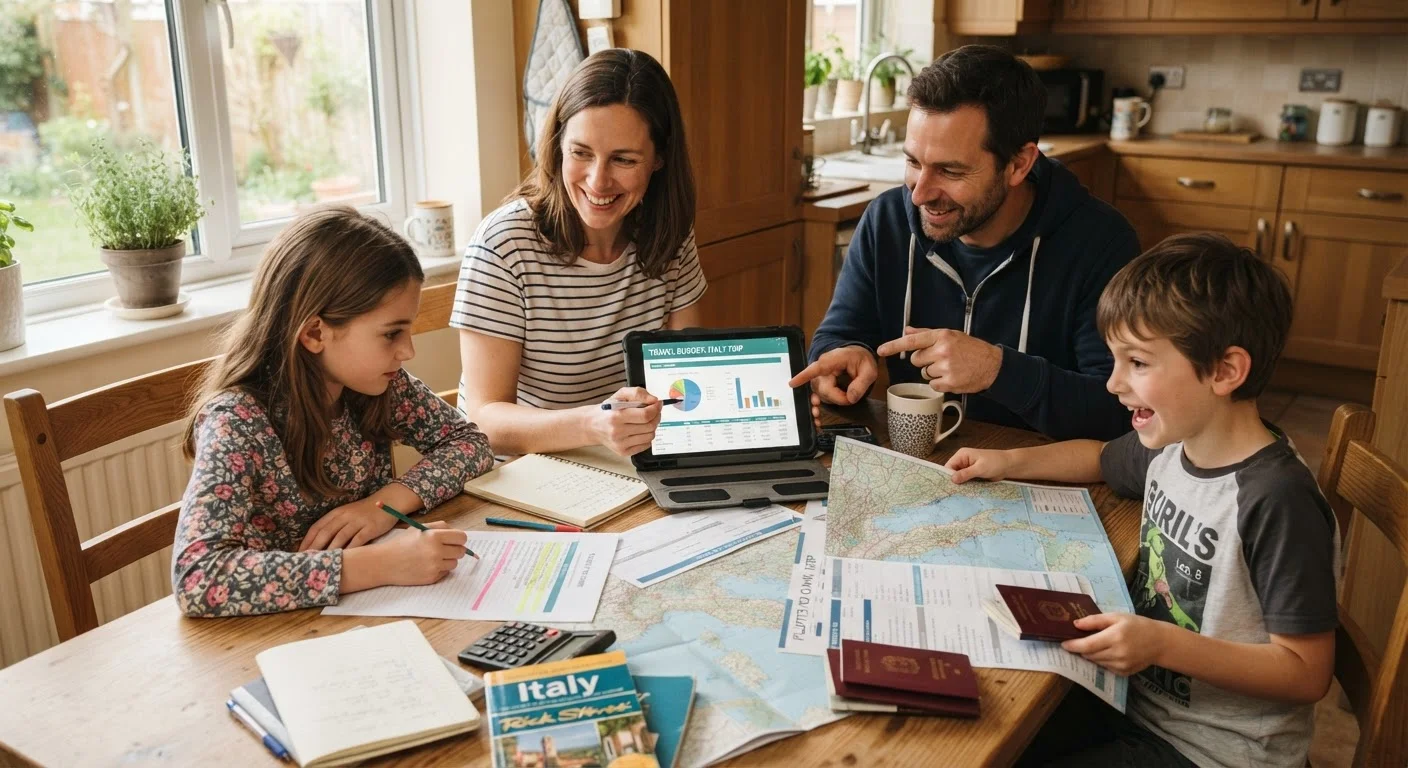
A family travel budget is a planned breakdown of every expected cost tied to a trip, from transportation and lodging to food, activities, and incidentals. It gives families a realistic picture of total spending before they commit to a destination or itinerary. The goal is to match what you plan to spend with what you can actually afford.
Budget categories often shift depending on trip type: a fly-and-stay vacation concentrates costs in flights and lodging, while a road trip spreads spending more evenly across fuel, food, and nightly stops.
Why most family travel budgets fall short
Families consistently underestimate trip costs, not because they are careless, but because travel spending is genuinely scattered across dozens of line items. You book a flight and a hotel room, and that feels like the budget is set. Then come the bags, the airport parking, the dinner out the first night, the entrance fees, and the inevitable gift shop stop. Each item looks small. The total does not.
Understanding how a travel budget actually breaks down across categories is the most direct way to stop that pattern. When you know which categories eat the most money, you can decide in advance where you are willing to spend and where you want to pull back, rather than reacting to a credit card statement after you get home.
Hidden costs that catch families off guard is a companion read worth keeping open as you work through your own numbers.
The core spending categories and their typical shares
Every family trip, regardless of destination, tends to distribute spending across the same five buckets.
Transportation
For flying families, airfare is usually the single largest line item, often 30 to 40 percent of a total trip budget once you add bags and ground transport at both ends. Road trips shift this share dramatically, since fuel and tolls spread costs more gradually. If you want a full picture of how driving costs stack up, the road trip budget breakdown covers every category in detail.
Lodging
Lodging typically lands between 25 and 35 percent of total spend. Families needing two hotel rooms face a sharp cost jump that solo travelers never encounter. Vacation rentals with a kitchen can shift that balance by enabling grocery-based meals.
Food
Food is the category families most consistently underestimate. Three meals a day for a family of four, even at modest restaurants, accumulates fast. Breakfast is the easiest and least painful meal to handle cheaply, whether that means a grocery run on day one or a lodging option with breakfast included.
Activities and entrance fees
National parks, theme parks, museums, and tours all charge per person, so a family of four or five pays multiples that a couple never sees. Strategies that actually work for families includes a look at free museum days and other ways to reduce this category without cutting experiences.
Incidentals and miscellaneous
Souvenirs, tips, laundry, over-the-counter medication, and convenience purchases round out the budget. This category rarely shows up in trip planning but regularly appears on statements.
35-40%
Average share of family travel budget spent on transportation
General travel budgeting guidelines consistently place transportation, including airfare and ground transit, as the largest single cost category for families flying to a destination.
$150-$250
Estimated daily food spend for a family of four eating out
Figures vary by destination and dining style; families who prepare some meals in a rental kitchen or pack snacks typically spend significantly less per day.
10-15%
Recommended contingency buffer as a share of total trip budget
Travel planners generally suggest setting aside this range to cover unexpected costs like medical needs, delays, or last-minute activity changes.
Where families have the most room to adjust
Not every budget category offers the same flexibility. Transportation costs, especially airfare, are largely fixed once you commit to a destination and dates. Lodging has some flexibility, but safety and location matter for families with children. Food and activities are where most families find genuine room to move.
Timing also shapes the entire budget. Traveling in shoulder season cuts both flight and lodging costs without sacrificing the experience at most destinations. The savings can be enough to fund an extra day or a paid activity that would otherwise be out of range.
Destination choice has the biggest single impact on total cost. The budget destinations hub is a practical starting point if you want to compare options where your dollar goes further. For families who love the coast but not resort pricing, coastal alternatives to pricey resort towns lays out spots worth considering.
Before any trip, run through a pre-departure financial checklist. The family travel money checklist covers the steps that prevent avoidable losses, from notifying your bank to setting a daily spending ceiling.
This article is for general informational purposes only. Travel costs vary widely by destination, travel dates, family size, and individual circumstances. Verify prices, fees, and entry requirements directly with providers and official sources before finalizing any travel plans.