

Home on a Budget

Before You Redecorate: A Room Assessment Checklist

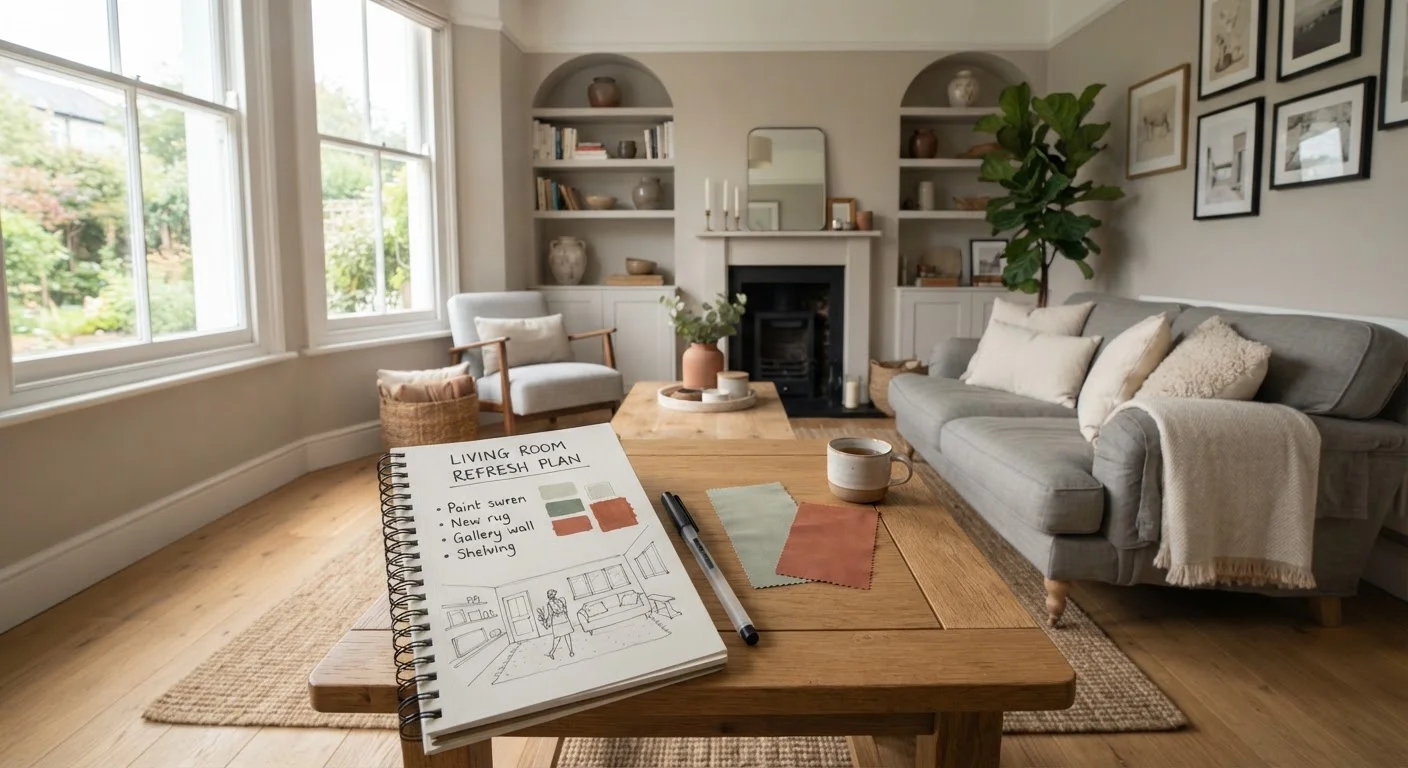
A living room with a notepad on the coffee table, ready for a redecorating assessment

Key Takeaways

  • Assessing what you already own before buying anything prevents duplicate spending and waste.
  • Structural and functional issues should be resolved before any cosmetic changes are made.
  • Many items can be repurposed or rearranged rather than replaced, at no cost.
  • Identifying one or two focal investments per room keeps budgets focused and effective.
  • Room lighting and layout decisions affect whether new decor will even look as expected.
30–60 min

Summary

22 items · 30 to 60 minutes per room

Why a room assessment saves money before you spend it

Most redecorating budgets inflate because families skip the audit phase and go straight to shopping. They buy new throw pillows before realizing the sofa placement is the actual problem. They paint walls before noticing the cracked baseboard that will need repair anyway. A structured assessment before any purchase forces you to see the room clearly, separate what is worth keeping from what genuinely needs replacing, and direct spending where it produces visible results.

This checklist works through a room in a logical sequence: structure first, then function, then aesthetics. Work through each group in order. If you find issues in an earlier group, resolve those before moving to later ones, because cosmetic changes on top of unaddressed problems waste money twice.

For broader context on where redecorating spending tends to go wrong, see common decorating myths examined before you start.

Structural and surface condition

Inspect walls for cracks, water stains, peeling paint, or mold. Note whether any require professional repair before painting or wallpapering. Must
Check baseboards, crown molding, and window trim for damage or separation from the wall. Must
Test floor surfaces for loose boards, bubbling, or stains that would show through a rug or require repair. Must
Confirm windows and doors open, close, and seal properly, since drafts affect both comfort and heating costs. Must

Lighting and electrical

Count the light sources in the room and note whether the current lighting creates dark corners, glare, or uneven brightness. Must
Test every outlet and switch to confirm they work. Flag any that do not for a licensed electrician before proceeding. Must
Assess natural light at different times of day so you know how paint colors and fabrics will actually appear in the space. Should

Layout and traffic flow

Walk the room's main paths and identify any furniture arrangement that blocks movement or makes the room feel crowded. Must
Measure the room and sketch a rough floor plan so you know exact dimensions before considering any new furniture. Must
Identify the room's natural focal point (a fireplace, window, or feature wall) and assess whether the current layout works with or against it. Should
Note whether rearranging existing pieces, without buying anything, could solve the layout problem on its own. Should

Inventory of existing pieces

List every piece of furniture and decor currently in the room and mark each as keep, repurpose, donate, or discard. Must
Check the structural integrity of each keep item: test joints, fabric, and finishes to confirm it is worth retaining. Must
Identify any item from another room in the house that could fill a gap here without a purchase. Should
Photograph items you plan to repaint, reupholster, or refinish so you have a before reference for comparison. Nice to have

Color, finish, and style audit

Write down every color currently present in the room, including flooring, trim, and fixed elements that will not change. Must
Identify which existing colors or finishes are the starting constraints for any new palette so purchases do not clash with fixed elements. Must
Note any items with strong style signals (ornate, industrial, mid-century) that would conflict with a different direction. Should

Budget framing

Set a total room budget before looking at prices, then allocate the largest share to the single item that will have the most visual or functional impact. Must
Write down the specific problem you are solving with this redecoration so you can test every potential purchase against it. Must
Reserve at least 15 percent of your budget for unexpected repair or prep costs identified during the assessment. Should

What to do with your assessment results

Once you have worked through the checklist, sort your findings into three buckets: fix now, repurpose or rearrange, and consider buying. The fix-now list covers anything structural or functional. Those items are not optional, and delaying them means any decorating you do on top of them is temporary at best.

The repurpose list is where most families find unexpected savings. A side table moved from a bedroom to a living room corner, a lamp rewired with a new shade, a bookcase repainted, these cost little or nothing and often solve the layout problems that were driving the urge to buy new things.

The consider-buying list should be short. Aim for one or two focal purchases per room, items that do real work visually or functionally, rather than a cart full of small accessories that add clutter without solving the original problem. Before any purchase, check the how to buy for maximum savings guide to time and approach your spending well.

If any of your findings involve structural repairs, permits, or licensed trade work such as electrical or plumbing, address those through qualified professionals before touching aesthetics. See the home improvement planning checklist for guidance on scoping that work correctly. General maintenance costs connected to your assessment may also be worth reviewing through home maintenance savings strategies.

Do not paint or decorate over unresolved repairs

Applying new paint, wallpaper, or trim over cracks, moisture damage, or mold will not fix the underlying problem and may make it harder to address later. Water stains in particular can bleed through fresh paint within weeks if the source is not fixed first. Resolve structural and moisture issues before any cosmetic work begins. If you are unsure whether a problem requires a licensed contractor, err on the side of getting a professional assessment.

Home on a Budget Editorial Team is the collective byline for our editorial team and contributor network. Articles published under this byline or an editorial pen name are researched, written, and reviewed according to our editorial standards for clarity, consistency, and independence before publication.

View all articles by Home on a Budget Editorial Team →
Disclaimer: The content provided on our blog site traverses numerous categories, offering readers valuable and practical information. Readers can use the editorial team’s research and data to gain more insights into their topics of interest. However, they are requested not to treat the articles as conclusive. The website team cannot be held responsible for differences in data or inaccuracies found across other platforms. Please also note that the site might also miss out on various schemes and offers available that the readers may find more beneficial than the ones we cover.