

Key Takeaways
- Most beginner DIY mistakes come from skipping the planning phase, not from lack of skill.
- A modest starter tool kit of 10 to 15 items covers the majority of common household projects.
- Some home projects require permits or licensed tradespeople regardless of your skill level.
- Building a realistic budget with a 15 to 20 percent contingency prevents mid-project surprises.
Start here
Start with the right mindset and realistic expectations
Next
Plan the project before buying anything
Then
Build a basic tool kit without overspending
Before you begin
Safety, permits, and knowing your limits
Start with the right mindset and realistic expectations
First-time DIYers often assume that skill is the main barrier. It is not. The bigger barrier is underestimating how much time, preparation, and patience a project actually takes. A task that looks like an afternoon on a video tutorial frequently takes a full weekend when you factor in a hardware store trip, a measuring mistake, and the learning curve on a new tool.
The most productive approach is to choose a project that is one level below your confidence. If you have never painted a room, start with one accent wall rather than a full-room repaint. If you have never installed anything, start with replacing a door handle rather than hanging a new door. Small wins build the practical knowledge that makes harder projects go smoothly later.
For a deeper look at how preparation failures lead to stalled projects and wasted money, see why DIY home projects go wrong.
Pick projects with visible results
Beginner projects that produce a clear, noticeable change tend to stay motivating through the less exciting steps. Painting, replacing light fixtures (after cutting power at the breaker), and refreshing trim are all tasks where the finished result is obvious. Visible progress makes it easier to carry the same discipline into your next project.
Plan the project before buying anything
Walking into a hardware store without a written plan is one of the fastest ways to overspend. Before you buy a single item, write down exactly what the project involves, what materials it requires, and a realistic timeline for each step.
Measure twice, write it down, then measure again. Material waste from incorrect measurements is a common cost driver that is entirely avoidable. When estimating quantities, add 10 percent for flooring or tile to account for cuts and breakage.
Build your budget with a 15 to 20 percent contingency. Projects frequently uncover a secondary problem once work begins: old drywall behind a tile, a rusted fastener that must be replaced, or a subfloor that needs patching. A buffer prevents these discoveries from stalling your progress.
The project planning checklist covers permits, tools, materials, and timeline in a format you can run through before touching anything.
Contingency budget
An extra amount of money set aside beyond your estimated project cost to cover unexpected problems or expenses that come up during the work.
Load-bearing wall
A wall that supports the structural weight of the building above it. Removing or altering one without proper engineering can compromise the home's structure.
Building permit
An official approval from your local government that certain types of construction or renovation work meets safety codes. Work done without a required permit can create legal and insurance problems.
Subfloor
The layer of structural material beneath your finished flooring (like hardwood or tile). Damage to the subfloor often needs to be addressed before new flooring can be installed.
Non-contact voltage tester
A handheld tool that detects electrical current without touching a wire directly. It confirms whether power is off before you work near an outlet or fixture.
Build a basic tool kit without overspending
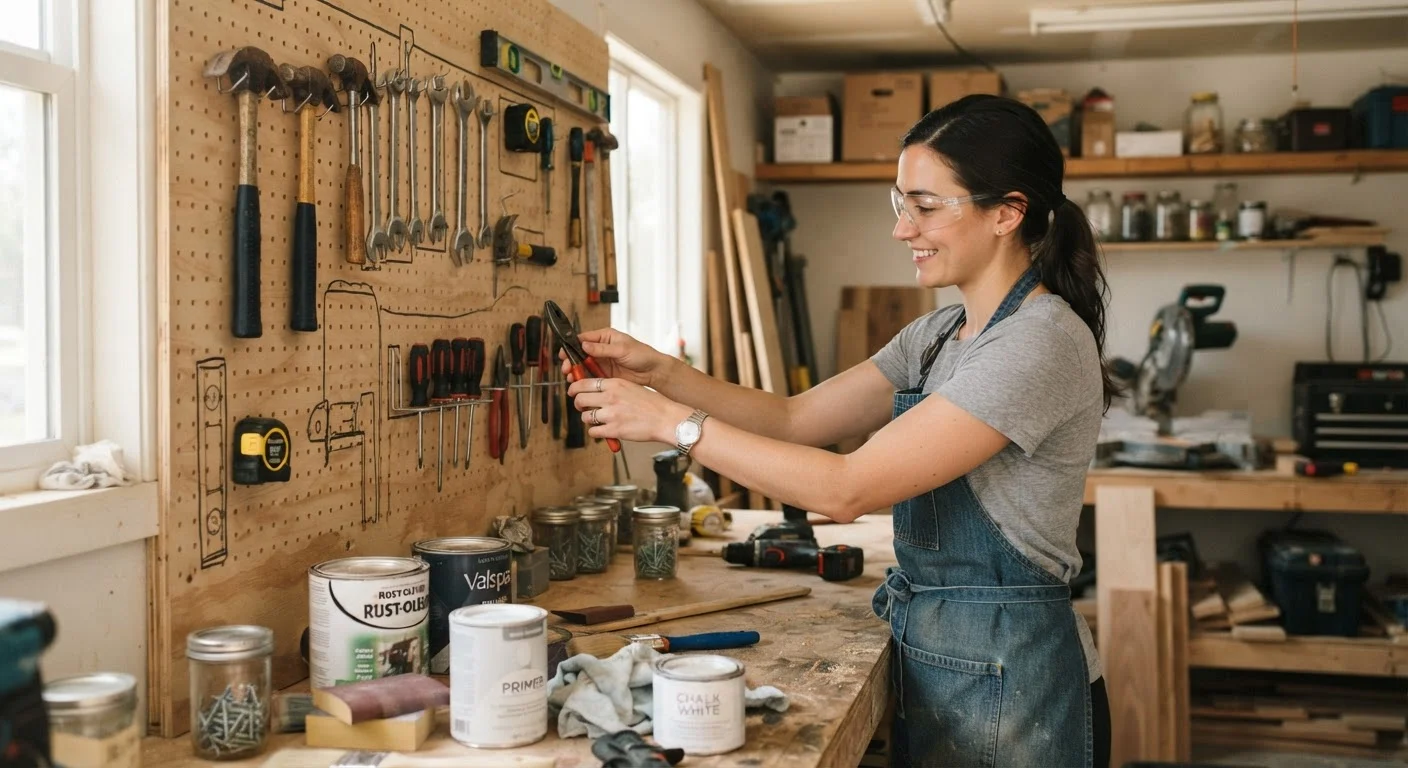
You do not need a fully stocked workshop to handle most beginner projects. A focused starter kit covers the majority of common household tasks at a fraction of the cost of buying tools as you go (which usually means buying duplicates or the wrong size in a hurry).
The tools that earn their place in most households:
- 25-foot tape measure
- Hammer (16 oz. claw)
- Cordless drill with a basic bit set
- Torpedo level or 4-foot level
- Utility knife with extra blades
- Phillips and flathead screwdrivers in multiple sizes
- Needle-nose and slip-joint pliers
- Safety glasses and work gloves
Invest more in tools you will use on every project, like a drill or tape measure, and spend less on items you will reach for rarely. Borrowing or renting specialty tools for a one-time job is almost always cheaper than buying them.
For broader strategies on getting the most from your purchases, the buying smart hub has guidance on timing and sourcing decisions that apply to tools and materials alike.
Safety, permits, and knowing your limits
Safety is not optional or secondary. Wear safety glasses whenever you cut, drill, or sand. Use work gloves when handling rough materials or sheet metal. Keep your workspace clear of trip hazards, and always unplug or power off anything electrical before working near it.
Certain categories of work are not appropriate for beginners regardless of willingness. Electrical work involving the panel or new circuits, gas line connections, structural modifications to load-bearing walls, and plumbing connections to the main supply all carry serious risks and are commonly regulated. Many require a licensed professional and an inspection by your local building department. Attempting this work without the right training or permits can void homeowner's insurance, create liability when you sell the property, and pose genuine safety hazards.
When in doubt about whether a task needs a permit or a licensed contractor, contact your local building department directly. The DIY vs. hiring a pro guide lays out which project categories families can handle themselves and which ones belong in a professional's hands. Good home maintenance habits also reduce the frequency of repairs that require outside help in the first place.