

Key Takeaways
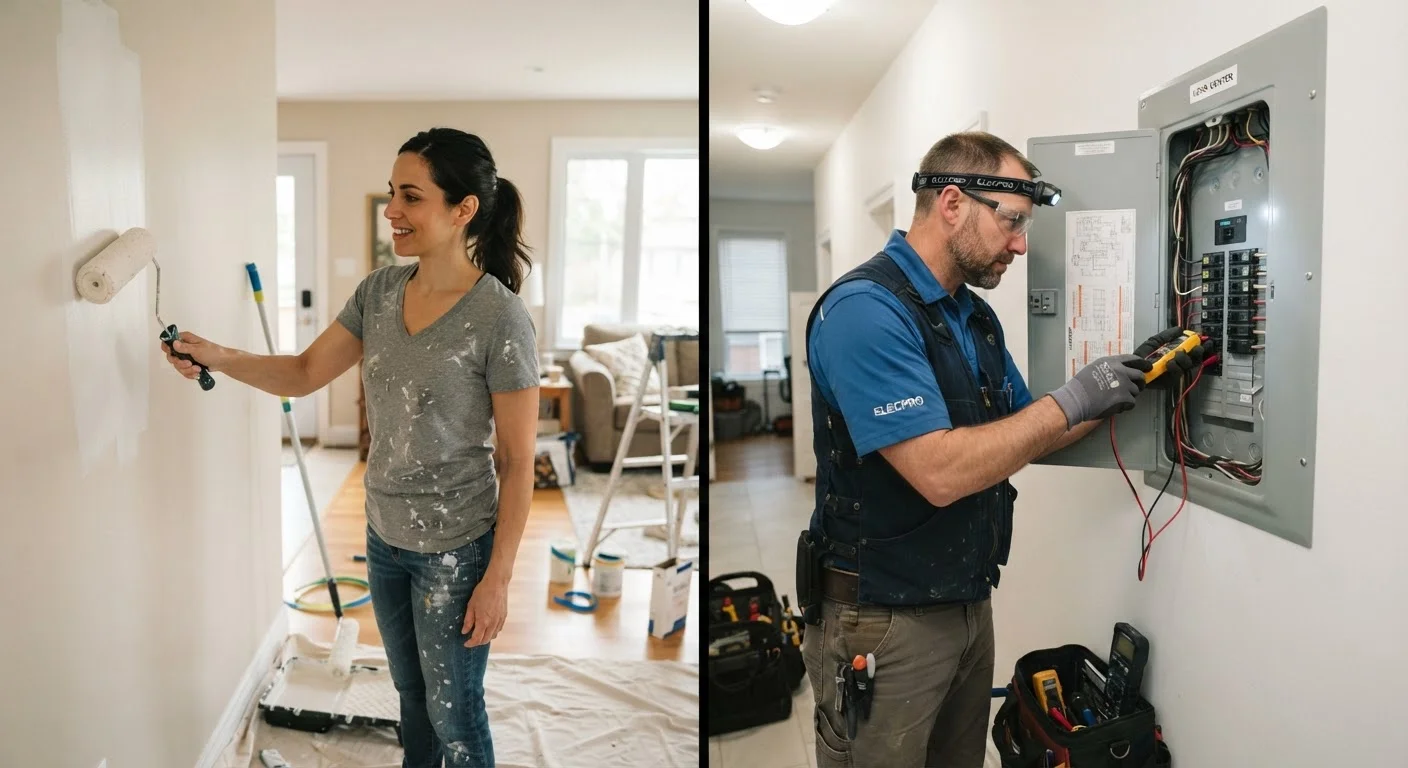
- DIY is well-suited to cosmetic and low-risk maintenance tasks that require no permits.
- Electrical, gas, structural, and major plumbing work generally requires a licensed professional by law.
- Skipping a permit on regulated work can create insurance gaps and legal problems when selling your home.
- A failed DIY attempt on a complex job often costs more to fix than hiring a pro from the start.
- Matching the right approach to each project is how families protect both their safety and their budget.
Option A
DIY (Do It Yourself)
The hands-on, cost-saving approach for capable home tasks.
Best for: Cosmetic updates, routine maintenance, and straightforward repairs that carry low safety and code risk.
Option B
Hiring a licensed professional
The code-compliant, liability-protected choice for complex or hazardous work.
Best for: Electrical, structural, gas, roofing, and plumbing work that requires permits, inspections, or specialized training.
If you want to refresh a room on a tight budget
DIY
Painting walls, installing peel-and-stick flooring, and patching small drywall holes are low-risk tasks most adults can complete safely with basic tools and preparation.
If you need to replace an outlet, add a circuit, or touch the breaker panel
Hiring a licensed professional
Electrical work carries serious shock and fire risk, and most jurisdictions require a licensed electrician and a permit for anything beyond replacing a switch cover.
If you are dealing with a gas appliance, furnace, or gas line
Hiring a licensed professional
Gas work is dangerous and heavily regulated. An unlicensed repair can void your appliance warranty, violate local codes, and create life-threatening hazards.
If you want to do routine seasonal upkeep like caulking or filter changes
DIY
Preventive tasks such as replacing HVAC filters, re-caulking tubs, and cleaning gutters are beginner-friendly and pay back well in avoided repair costs.
If you notice cracks in load-bearing walls or your foundation
Hiring a licensed professional
Structural issues can worsen rapidly if misjudged. A licensed structural engineer or contractor must assess and remedy these problems safely.
How to read a project before you start
The question is not whether DIY saves money in general. The question is whether this specific project is one where doing it yourself is safe, legal, and likely to produce a good result. Before picking up a tool, run through four quick checks: Is a permit required? Is there a hazard if I get it wrong? Do I have the skills this actually needs? And will a DIY attempt void a warranty or create an insurance problem?
If any answer is yes, that does not automatically mean you must hire out. It does mean you need to do more research before committing. Common DIY missteps often stem from skipping this assessment entirely.
Work that falls into regulated categories, including electrical beyond cosmetic fixture swaps, anything touching gas lines, structural modifications, and most roofing work in jurisdictions that require licensed contractors, carries legal weight. Unpermitted work can complicate a home sale, result in fines, and in some cases require demolition and redo at your cost. Check with your local building department before starting anything in these categories.
| Criterion | DIY | Hiring a licensed professional |
|---|---|---|
| Typical cost | Materials only | Labor plus materials |
| Permit required | Rarely for cosmetic work | Often for regulated work |
| Safety risk if done wrong | Low for approved DIY tasks | Managed by licensed expertise |
| Insurance implications | Minimal for low-risk tasks | Contractor carries liability |
| Code compliance | DIY owner responsible | Professional accountable |
| Best project types | Painting, caulking, filters | Electrical, gas, structural |
| Skill floor | Basic tool familiarity | Licensed trade certification |
What most families can handle safely
Cosmetic and routine maintenance tasks are where DIY pays off most reliably. Painting interior walls and ceilings, replacing light switch covers and outlet covers (with the breaker off), patching nail holes or small drywall dings, installing peel-and-stick or click-lock flooring over a prepared subfloor, and re-caulking around tubs and sinks are all within reach for adults with basic tool familiarity and patience.
Routine maintenance, the kind covered in a good seasonal home maintenance checklist, is another strong DIY category. Replacing HVAC filters, cleaning dryer vents, flushing a water heater, sealing gaps around doors and windows with weatherstripping or caulk, and cleaning gutters are all tasks that carry low physical risk and produce real savings. Preventive maintenance done consistently is one of the most reliable ways families reduce large repair bills over time.
The common thread in safe DIY work: if you get it wrong, the consequence is cosmetic or minor, and fixing the mistake does not require tearing into walls, calling an inspector, or risking anyone's safety.
Where the line sits for licensed work
Certain categories are consistently regulated across most U.S. jurisdictions because the consequences of errors are severe. Electrical work beyond swapping a light fixture or cover plate generally requires a permit and a licensed electrician. This includes adding circuits, replacing panels, running new wiring, or installing a new outlet. The hazard is not just shock during the repair; wiring errors cause house fires that develop months later.
Gas line work, including connecting appliances, replacing gas valves, or touching supply lines, must be handled by a licensed plumber or gas technician in most states. Even small leaks from improper fittings can accumulate to dangerous concentrations. Similarly, any work on load-bearing walls, foundations, or roof structures needs a licensed contractor and, in most cases, a permit and inspection. These are not optional steps; they protect you legally and protect future buyers of your home.
Major plumbing, meaning anything that ties into main supply or drain lines rather than just replacing a faucet or toilet supply tube, also tends to require permits. The risk of a hidden slow leak inside a wall, or improperly vented drain pipes, can produce mold damage that far exceeds the original repair cost. If you are weighing whether the savings are worth it, see when DIY actually saves money and when it does not for a grounded breakdown.
Making the call without second-guessing yourself
A useful decision rule: if the project requires you to open a wall, touch a panel, work with gas, or alter the structure of the home, get a professional assessment before proceeding. Many licensed contractors offer free or low-cost estimates, and even paying for one hour of a professional's time to evaluate a problem can save thousands if it confirms something you should not attempt alone.
For everything else, first-time DIYers who invest a little time in planning and preparation tend to get solid results on cosmetic and maintenance projects. The goal is not to do everything yourself or to hand everything off. The goal is to know which category each job belongs to before you commit time and money to it.
This article provides general home improvement information and education. It is not a substitute for professional assessment, and local building codes vary widely. Always verify permit and licensing requirements with your local building department before beginning any regulated home repair or improvement project.