

Key Takeaways
- Each retailer's overhead, purchasing volume, and store strategy directly influence the price you see.
- Supply chain position matters: a retailer who buys directly from a manufacturer often pays less.
- Convenience locations and premium shopping environments typically charge more, by design.
- Promotional pricing at one store does not mean the item is overpriced everywhere else.
- Comparing total cost, including shipping and fees, gives a more accurate picture than sticker price alone.
Retail price variation
Retail price variation is the difference in the price charged for the same product at different stores. It happens because each retailer sets prices based on its own costs, strategy, and customer base, not on a universal standard. The price you see reflects decisions made long before the product reached the shelf.
Manufacturers may set a Minimum Advertised Price (MAP), which is the floor below which retailers agree not to publicly advertise a product, though actual in-store or checkout prices can sometimes go lower.
The cost behind the price tag
Every retail price is built on a stack of costs the shopper rarely sees. Rent for a store in a high-traffic urban location is substantially higher than rent for a suburban warehouse. Staff levels, shrinkage rates, energy costs, and regional distribution expenses all feed into the margin a retailer needs to remain solvent. When a store charges more than a competitor for an identical item, it is usually because its cost structure demands it, not because it is extracting arbitrary profit.
Purchasing volume is another structural factor. A national chain that orders a million units of a laundry detergent negotiates a much lower wholesale cost than a regional grocery that orders ten thousand. That difference flows directly to the shelf price. Smaller independent retailers often pay more per unit simply because they lack the scale to demand better terms.
Supply chain position matters too. A retailer that sources directly from a manufacturer removes a distributor or wholesaler from the chain, reducing cost. One that buys through an intermediary pays that intermediary's margin. Both stores can stock the identical product while paying different amounts for it.
Store format and what it signals about pricing
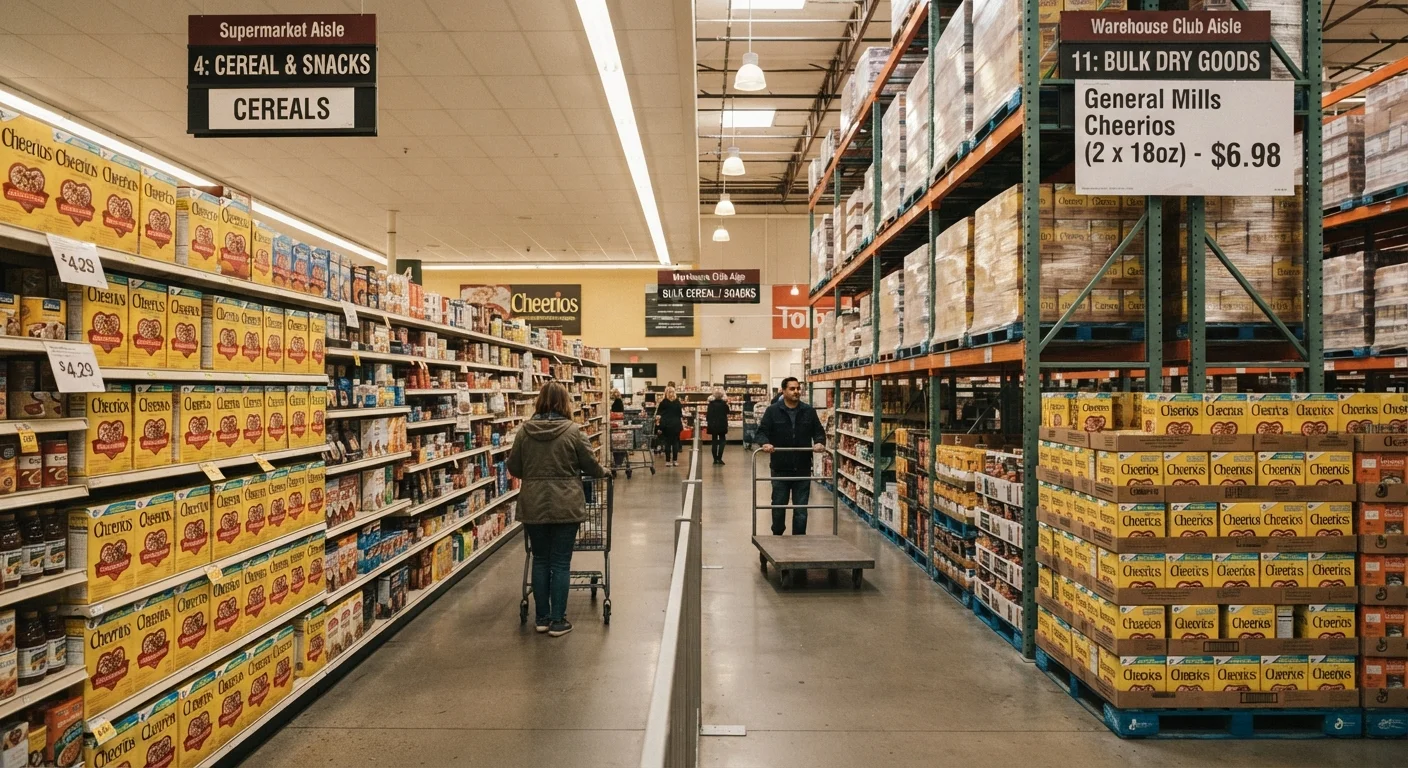
The type of store is often the clearest predictor of where prices will land. Warehouse clubs operate on thin margins per item and recover through membership fees and volume. Dollar-format stores prioritize a low sticker price but may sell smaller pack sizes that cost more per unit than a standard grocery. Specialty retailers charge a premium because they have curated assortments, trained staff, or a shopping environment customers associate with expertise.
Convenience stores sit at the high end because their entire value proposition is proximity and speed. The price gap on a bottle of ibuprofen between a convenience store and a pharmacy reflects that trade-off plainly. Shoppers pay for not having to drive further, and the store prices accordingly.
Understanding format helps you set realistic expectations before you walk in. See our framework for comparing prices before a major purchase for a structured way to use this knowledge when the stakes are higher.
Up to 30%
Price variation for identical items across retail formats
Consumer research has found that the same branded product can vary by as much as 30% in price between store formats like grocery, warehouse club, and specialty retail.
Multiple times daily
How often major online retailers update prices
Pricing analysts have documented that large e-commerce platforms can update prices on popular items several times within a single day based on demand and competitive data.
Dynamic pricing and promotional calendars
Online retail has added another variable: prices that change by the hour. Algorithms adjust prices based on competitor listings, demand patterns, and remaining inventory. A television listed at one price in the morning may carry a different price by evening, with no announcement. This means a price check yesterday is not necessarily valid today.
Brick-and-mortar stores use promotional calendars instead. A retailer may run a category on promotion every four to six weeks, rotating which items carry the markdown. A shopper who buys laundry detergent at full price the week before a planned sale pays more than one who waits. Seasonal price cycles follow predictable patterns for categories like electronics, furniture, and apparel, and timing a purchase around those windows can produce real savings without any coupon.
Retailers also use loss leaders, items priced at or below cost to draw traffic, expecting shoppers to buy additional full-margin products. A very low price on a popular item at one store does not mean that store is cheaper overall. It may be the one item the retailer is willing to lose money on.
What this means for how you shop
Knowing why prices vary helps you evaluate what you see rather than simply react to it. A price that looks high at one store may be fair given that store's cost structure. A price that looks low may be a promotional exception or a smaller unit size. The tactics retailers use to influence spending decisions can make a middling deal feel like a great one, so separating format effects from genuine savings is worth the effort.
Total cost is the right comparison point, not sticker price alone. Add shipping charges, membership fees, and any return-shipping costs when comparing across channels. A $5 savings on a product that costs $8 to ship is not a savings at all. Our article on bulk buying versus buying as needed applies the same logic to pack-size decisions, which is another place where apparent savings can reverse under scrutiny.