

Key Takeaways
- Anchor prices set a reference point that may not reflect a product's true market value.
- Countdown timers and low-stock warnings may not signal genuine scarcity.
- Decoy pricing steers shoppers toward a specific option by making it appear relatively superior.
- Comparing prices across sources before buying is more reliable than trusting in-store framing.
- Knowing these tactics does not make you immune to them, but it changes how you evaluate a price.
How pricing tactics work
Retail prices are rarely chosen at random. Merchants use structured pricing formats that shape how shoppers interpret value, and three of those formats appear often enough to be worth understanding: anchoring, artificial urgency, and the decoy effect. None of them are hidden or illegal. They are standard practice. What they share is that they frame a price against a comparison point designed to make a specific choice feel obvious.
Understanding these tactics does not require a background in behavioral economics. It requires recognizing when a price is being presented relative to something else, and asking whether that comparison is meaningful.
Reading price tags carefully before committing to a purchase can help you separate genuine value from engineered perception.
Common misconceptions about pricing
Shoppers hold some durable beliefs about retail pricing that are either partially wrong or entirely wrong. The myth-and-fact pairs below address the most consequential ones.
Myth
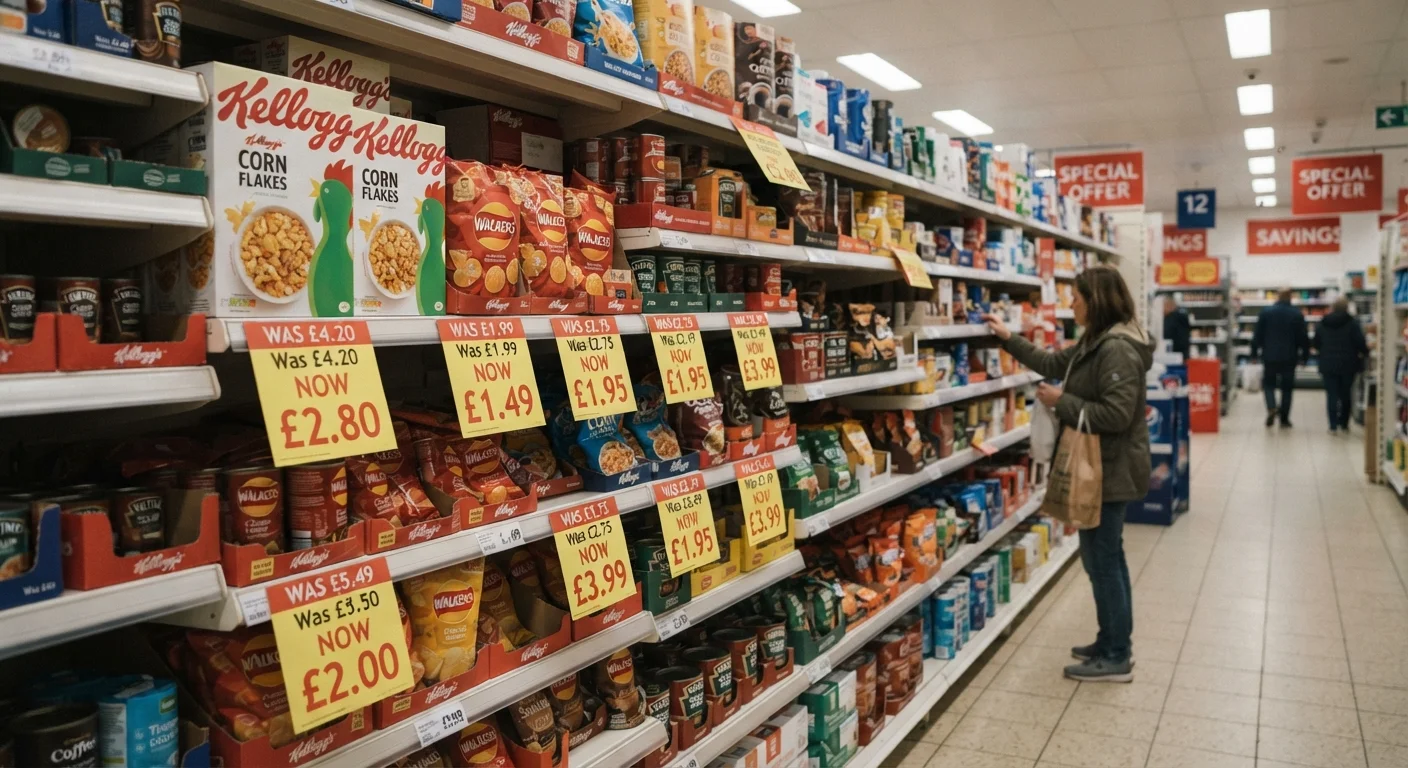
A crossed-out price next to a sale price means you are saving a real amount of money.
Fact
The original price shown may never have been the standard selling price, so the implied savings figure can be misleading.
U.S. Federal Trade Commission guidelines state that a former price used for comparison should reflect a price at which actual sales occurred, not a figure set artificially high to make a discount look larger. Several state attorneys general have pursued cases against retailers whose "original" prices were set far above any price at which items actually sold. Before treating a strikethrough price as a reliable baseline, check what the same item costs at other retailers or through a price-history tool that tracks actual transaction prices over time.
Myth
A countdown timer on a sale page means the deal genuinely expires at that time.
Fact
Many countdown timers reset or the same price continues after the timer reaches zero.
Countdown timers are a common urgency mechanism. In some cases the sale does end as shown. In others, the timer resets automatically or the promoted price remains in place indefinitely. Consumer researchers have documented that time pressure consistently shortens deliberation and increases impulse purchases. If a sale price is available today, it is worth checking whether the same price was available yesterday and the week before. Price-tracking browser extensions can show this history for common retail categories.
Myth
The middle option in a three-tier pricing menu is always the most sensible choice.
Fact
The middle option is often the one the seller wants you to choose, positioned to appear balanced without being so.
This is the decoy effect in direct form. Behavioral economist Dan Ariely described a classic version of it: when a magazine offered a print-only subscription, a digital-only subscription, and a combined print-plus-digital subscription at the same price as print-only, almost everyone chose the combined option. The print-only tier existed to make the combined tier look like a bargain, not because anyone was expected to buy it. The same structure appears in streaming plans, phone storage tiers, and retail bundles. Evaluate each tier on what you will actually use, not on how it compares to the others on the same screen.
Myth
Low-stock warnings mean an item is genuinely about to sell out.
Fact
Low-stock messages can be displayed regardless of actual inventory levels and are sometimes generated automatically to trigger urgency.
Inventory transparency varies widely. Some retailers show real-time warehouse data; others display threshold messages that activate whenever stock drops below a set number, even if that number is large. Still others show the same message persistently. If scarcity is the reason you are considering a purchase you would not otherwise make, it is worth pausing to ask whether you have verified scarcity at more than one source. For items following predictable seasonal price cycles, the sense of urgency may conflict with the reality that prices drop further at a specific time of year.
Myth
Knowing about these tactics makes you immune to them.
Fact
Awareness reduces but does not eliminate the effect of pricing tactics on decision-making.
Research in behavioral economics shows that people who can accurately describe anchoring, framing effects, and scarcity cues still demonstrate measurable responses to them in purchasing contexts. Awareness is useful because it prompts a pause, and that pause is where deliberate comparison happens. The practical counter is process: setting a price target before browsing, using external price references, and separating the research step from the buying step. These habits do more than abstract knowledge alone.
What these tactics mean in practice
Price anchoring depends on the first number you see. A $400 item marked down from $800 feels like a deal regardless of whether $800 was ever a real transaction price. Some retailers set original prices well above any price at which they ever sold the product, a practice that has drawn regulatory scrutiny in several U.S. states. The markdown percentage is calculated from that inflated figure.
Urgency cues exploit a well-documented tendency to weigh potential loss more heavily than equivalent gain. Seeing "only 3 left" activates concern about missing out, even when the same item is in stock at a dozen other retailers. Before acting on a countdown or a low-inventory warning, check whether the same product is available elsewhere and at what price.
The decoy effect works because humans evaluate options comparatively. When a third pricing tier is added to a two-option menu, and that third tier is positioned to make one of the original options look superior, most people choose that option. Subscription and SaaS pricing often uses this deliberately, but it also appears in retail bundles and service plans.
For a structured approach to evaluating any major purchase before you spend, see a practical framework for comparing prices. And if you want to understand why the same item carries different prices at different stores, pricing differences across retailers covers the real mechanisms behind those gaps.