

Key Takeaways
- Camping costs significantly less per night than motels, but requires upfront gear investment.
- Motels offer predictable comfort and are easier with very young children or tight schedules.
- Flexibility and spontaneity differ sharply between the two options.
- A hybrid approach works well for longer trips with varied terrain and weather.
- Hidden costs exist on both sides and deserve a place in your trip budget.
Our Verdict
Neither camping nor motels win outright. Camping puts more money back in your pocket on longer trips and suits families who enjoy outdoor time, while motels reduce logistical friction and suit those with infants, tight timelines, or unpredictable weather. Many families find a mix of both across a single trip gives the best balance of savings and sanity.
| Best for | Recommended |
|---|---|
| Families on tight budgets with children ages 5 and up | Camping |
| Families with infants or toddlers needing reliable sleep environments | Motels |
| Longer road trips covering national parks or rural routes | Camping |
| Trips with strict daily driving schedules or early arrivals | Motels |
The real cost difference
A standard motel room for a family of four runs roughly $80 to $150 per night depending on region and season. A campsite at a state or national park typically costs $20 to $45 per night. Over a seven-night trip, that gap can reach $700 or more, which is real money for a family watching its budget. See how other overnight expenses fit into the bigger picture in our family travel budget breakdown.
Camping does carry startup costs if your family is new to it. A basic tent, sleeping bags, and a camp stove can add several hundred dollars to a first trip. Families who camp regularly spread that cost across many trips, but one-timers may find motels cheaper in year one. Gear rental is available at some outdoor outfitters and near popular parks, which can cut initial outlay significantly.
Motels also have hidden costs worth counting: pet fees, resort fees at some properties, and paid parking in urban areas can add $20 to $40 per night. Campground fees are usually all-in, though some sites charge extra for electric hookups or firewood.
| Camping | Motels | |
|---|---|---|
| Average nightly cost | $20 to $45 | $80 to $150 |
| Upfront investment | Gear needed ($200 to $500+) | None required |
| Booking flexibility | Often book weeks ahead | Same-day usually possible |
| Sleep quality | Weather and age dependent | Consistent, climate-controlled |
| Suitability for infants | Challenging | Well-suited |
| Kid engagement value | High (outdoor activity included) | Low (room only) |
| Packing load | Heavy (tent, bedding, cooking) | Light (clothes only) |
| Hidden costs | Electric hookups, firewood | Fees, parking, pet charges |
Comfort and sleep quality
For families with infants or toddlers, reliable sleep is not optional. A motel provides a controlled environment: climate control, a crib on request, blackout curtains, and a bathroom a few feet away at 2 a.m. That matters enormously when a missed nap derails the next day's drive.
Camping sleep varies widely. In good weather on flat ground with quality sleeping pads, older kids often sleep soundly and even enjoy the novelty. In rain, heat, or cold, sleep quality can drop fast. A family camping in July in the Southeast or at high elevation in a budget sleeping bag will feel it.
Cabin rentals at campgrounds split the difference. Many state park campgrounds offer simple cabins with cots and electricity for $50 to $90 per night, closer to motel pricing but with the campground atmosphere intact.
Flexibility and logistics
Motels allow late arrivals without penalty, which matters when driving with kids who nap unpredictably or when you stop longer at a roadside attraction than planned. Most chains accept same-day bookings and cancellations, which suits spontaneous families. Our scenic routes vs. interstates comparison explores how your route choice can affect the type of overnight stays available along the way.
Campgrounds, particularly at national parks, often require reservations weeks or months in advance for peak season. Showing up without one at a popular site in July is a real risk. That said, walk-up sites exist at many state parks and lesser-known campgrounds, and apps that track cancellations can help flexible families snag spots last-minute.
Packing for camping adds complexity. A car already loaded with kids' gear gets fuller fast with tent, cooking equipment, and sleeping bags. Families in smaller vehicles may find the logistics genuinely cramped.
Suitability by child age
Children under two generally do better in motels. The controlled environment reduces variables: no bugs, no ground-level hazards, no cold nights. Toddlers aged two to four can enjoy camping but require close supervision around fire rings, water, and uneven terrain.
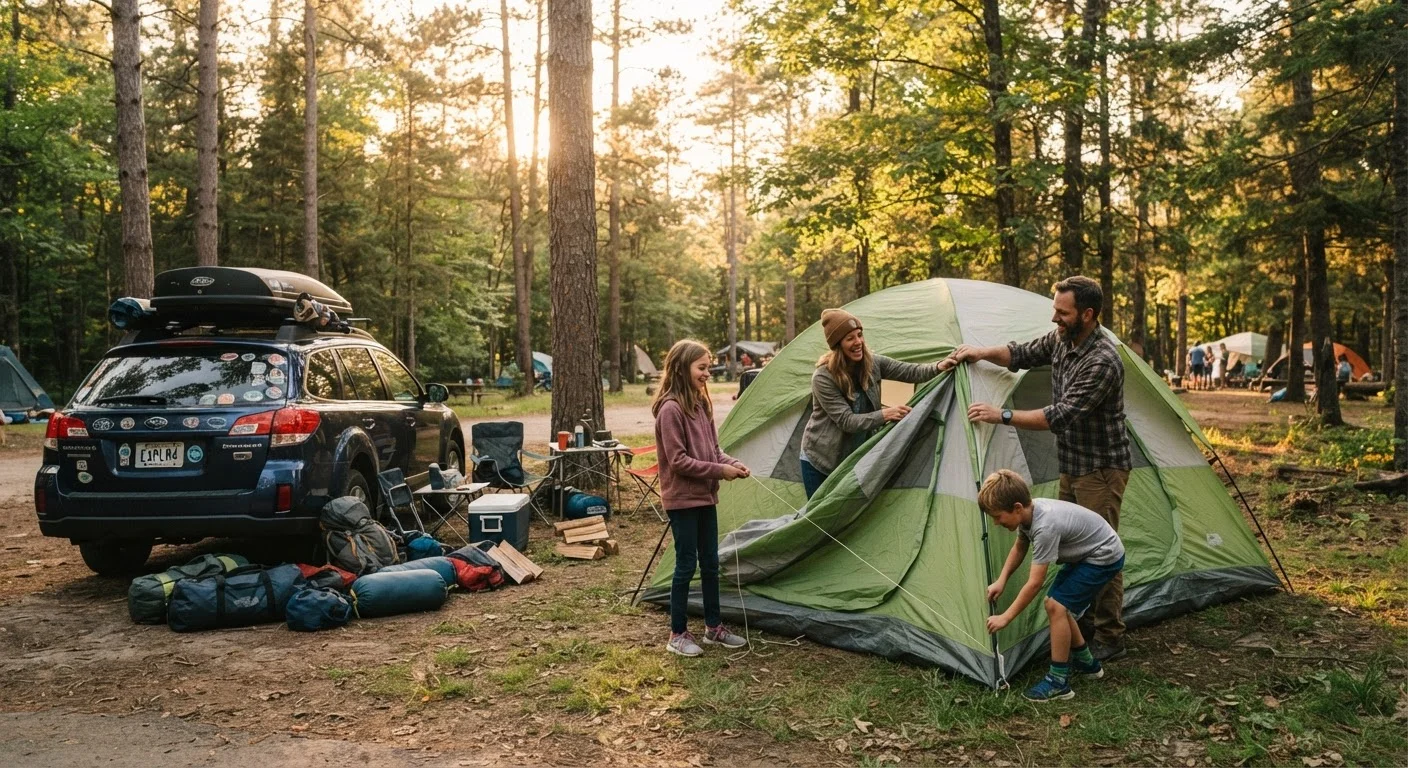
Children five and older tend to take to camping readily. The novelty of sleeping outside, cooking over a camp stove, and exploring trails turns an overnight stop into its own activity, which can cut spending on paid attractions. For more ideas on keeping children engaged through long driving days, see keeping kids engaged across hundreds of miles.
Teens often prefer the independence camping allows compared to sharing a motel room with the whole family. Giving older kids a small task like fire-building or meal prep also reduces the "I'm bored" factor that costs money in impulse stops.
Making a hybrid approach work
Many families find the most practical answer is a mix. Camp in national and state parks where scenery rewards the setup effort and reservations are worth making. Use motels on nights when you arrive late, the weather looks poor, or the next day's drive needs an early start.
Budgeting both options in advance keeps surprises low. Road trips often cost more than families expect, and overnight costs are one area where a clear plan prevents overruns. Mapping out which nights call for each option before you leave home also lets you book campsites in advance where needed without locking every night into a rigid plan.
For a full framework covering routes, packing, and stop planning alongside your overnight strategy, the family road trip planning guide pulls it all together.