

Key Takeaways
- Each project on this list costs under $50 and can be completed in one weekend.
- Caulking, weatherstripping, and sealing gaps can reduce household energy costs noticeably.
- Fresh paint on doors, trim, or a single accent wall is one of the highest-return updates available.
- Proper prep work determines whether a weekend project lasts years or fails within months.
- Safety comes first: know which tasks require a licensed professional before you start.
Why small projects add up fast
Most families put off home improvements because the mental image is a contractor, a big invoice, and two weeks of disruption. The reality is that a large share of the wear, drafts, and visual fatigue in a home traces back to problems a single person can fix in an afternoon with under $50 in materials.
Before picking up any tool, take a few minutes with our first-time DIYer planning guide to confirm you have the right safety gear and a clear sense of scope. And if you want to pair these structural fixes with some visual refreshes, the room-by-room affordable decor guide covers low-cost styling moves room by room.
The eight projects below are ordered loosely from functional to cosmetic, because fixes that protect your home from moisture and air loss tend to pay back faster than pure aesthetic upgrades.
Seal air leaks with caulk
A tube of paintable caulk costs around $5 and seals the gaps around window frames, door casings, and baseboards where conditioned air escapes year-round. Run a bead along any joint where two different materials meet: wood trim against drywall, window frame against siding, pipe penetrations through walls. Smooth with a wet finger, let it cure overnight, and paint over it once dry. The whole house typically takes two to three tubes and a few hours.
A $5 tube of caulk applied in an afternoon can meaningfully cut air leakage around windows and doors.
Replace worn weatherstripping on exterior doors
Foam or rubber weatherstripping on exterior doors compresses and cracks over a few years, leaving a visible gap that lets in cold air, hot air, and bugs. Peel off the old strip, wipe the door stop clean, and press on a self-adhesive replacement. Most standard door kits cost $8 to $15 and require only scissors and a tape measure. Check the door sweep at the bottom too: a $10 door sweep screws onto the door face and closes the gap at the threshold.
Worn weatherstripping on a single exterior door can account for a surprising share of a home's air leakage.
Install a low-flow showerhead
Standard showerheads use 2.5 gallons per minute or more. Low-flow models certified to 1.8 gallons per minute or less are widely available for $15 to $30 and install with nothing more than adjustable pliers and plumber's tape. Turn off the water supply at the valve, unscrew the old head, wrap the threads with two layers of plumber's tape, and hand-tighten the new one. For a household that showers daily, the reduction in hot water use is consistent and measurable over time.
Swapping a showerhead takes under 20 minutes and reduces hot water use with every shower afterward.
Paint a single accent wall
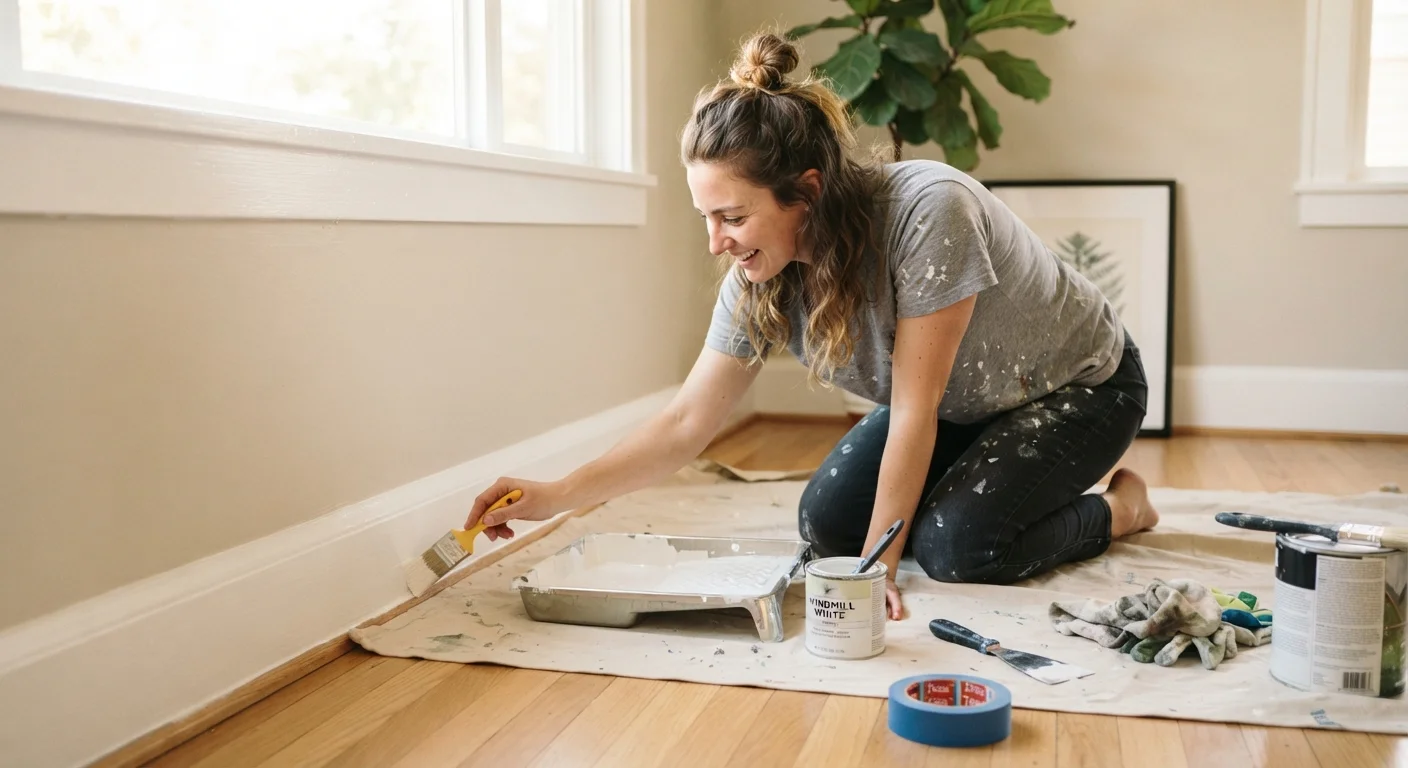
One gallon of interior latex paint covers roughly 350 to 400 square feet and costs $25 to $45 depending on quality. A single accent wall in a living room or bedroom typically needs one gallon, one brush, a small roller, painter's tape, and a drop cloth: total outlay often under $50. Choose the wall that faces the room's entry point for the most visual impact. For a clean result, sand any rough patches, wipe the wall down, and apply painter's tape along all edges before rolling. Two thin coats beat one thick coat every time.
A single painted accent wall changes how a room reads, for the cost of one gallon of paint and an afternoon.
Clean and reseal grout in a bathroom or kitchen
Grout is porous and absorbs moisture, soap residue, and mold spores over time. A stiff grout brush, a bottle of oxygen bleach cleaner (around $8), and an afternoon of scrubbing can restore grout to near-original color without any regrouting. Once clean and fully dry (allow 24 hours), apply a grout sealer from a squeeze bottle: a $10 to $15 bottle covers most standard bathrooms. Sealed grout resists staining and moisture for one to two years before it needs redoing.
Clean, sealed grout makes a bathroom look freshly renovated without touching a single tile.
Add door and cabinet hardware
Swapping out dated interior door handles or cabinet pulls is one of the fastest cosmetic upgrades in a home. Standard interior door knobs run $8 to $20 each and swap out with a screwdriver in about five minutes per door. Cabinet pulls for a kitchen are similarly priced per piece, and replacing a full set of 10 to 12 pulls can cost $30 to $50 total if you shop basic styles. The catch: measure the existing hole spacing (center to center) before buying pulls, since sizes are not universal. A template or a piece of tape with the measurement prevents wasted trips.
New cabinet hardware is one of the fastest ways to change a kitchen's appearance without touching a surface.
Install outlet covers and child safety features
Standard outlet covers cost under $1 each and take seconds to swap. Tamper-resistant outlet covers (which have built-in shutters that block objects other than plugs) run about $3 to $5 each and require replacing the outlet itself rather than just the cover plate, which involves working inside an electrical box. If you are comfortable turning off the circuit breaker and confirming power is off with a non-contact voltage tester, replacing an outlet is a straightforward task. If not, this is a good one to hand to a licensed electrician: the cost per outlet is low and the safety case is clear.
Tamper-resistant outlets are a one-time low-cost upgrade that removes a persistent hazard in homes with children.
Refresh caulk around the tub or shower surround
Old tub caulk that has cracked, discolored, or pulled away from the surface is not just unsightly: it lets water behind the wall, where it causes mold and eventually structural damage. Remove the old caulk with a plastic scraper and a caulk remover gel ($5 to $8), clean the joint with rubbing alcohol, let it dry completely, and apply a fresh bead of 100% silicone tub-and-tile caulk ($7 to $12). Silicone is more flexible than latex and holds up to the constant wetting and drying a tub surround gets. Tape the joint on both sides before applying for a straight, professional line. For more ideas on refreshing spaces affordably, see small decorating changes that shift a room's feel.
Recaulking a tub surround stops water intrusion that silently causes mold and wall damage over time.
Getting the most out of your weekend
Cluster projects by location or by the tools they share. Doing all your caulking in one pass, for example, means you buy one tube, mix one batch of attention, and clean up once. That saves both money and time compared to spreading the same work across several weekends.
Buy materials before the weekend starts
A Saturday morning hardware run followed by a second run for a forgotten item burns hours that could go toward finishing the project. Write out your full material list the night before, include quantities, and buy everything in one trip. Add 10% extra for consumables like caulk or paint so you are not caught short mid-project.
Skipping prep is the most common reason weekend projects disappoint. Painting over peeling surfaces, caulking over dirty gaps, or installing weatherstripping on a warped frame all produce short-lived results. Our guide to common DIY mistakes walks through exactly where families lose time and money before a tool even comes out.
Once these weekend projects are done, fold a simple inspection schedule into your annual plan. The home maintenance budget guide helps you prioritize what to tackle next so deferred repairs never snowball into expensive emergencies.