

Key Takeaways
- Pick a two- or three-color palette for the whole home before buying anything.
- In every room, invest in one anchor piece and fill around it with low-cost accents.
- Secondhand and thrift sources can supply quality items at a fraction of retail cost.
- Paint is the single highest-return decorating move available at low cost.
- Assess what you already own before spending. Many pieces can be repurposed or repositioned.
Start here
Start with a framework, not a shopping list
Next
Living room: anchor pieces and layered accents
Then
Bedroom: simplicity over quantity
Continue
Kitchen and dining area: function first, then style
Finish strong
Bathroom and entryway: high-impact, low-spend zones
Start with a framework, not a shopping list
Most first-time decorators make the same mistake: they buy things they like and then try to make them fit together. The result is a home that looks busy rather than pulled together. A framework fixes that by setting ground rules before any money is spent.
The framework has three parts. First, pick a palette: two neutral colors and one accent that you will repeat in every room. Second, identify what you already own that works within that palette. Third, list what each room actually needs, not what looks nice in a photo, before buying anything. Our room assessment checklist walks through this process room by room so you do not spend a dollar on the wrong thing.
If some of the vocabulary used in décor articles confuses you, this guide to décor terminology decodes the most common terms, from accent walls to vignettes, so you can plan and shop with confidence.
Anchor piece
The largest or most dominant item in a room, such as a sofa, bed, or dining table. All other decor decisions in that room are chosen to work around it.
Color palette
A limited set of colors you commit to repeating throughout your home. A palette of two neutrals and one accent color keeps rooms feeling connected.
Accent color
A single non-neutral color used in small amounts across a room, in cushions, artwork, or a single wall, to add visual interest without overwhelming the space.
Vignette
A small, intentional grouping of objects arranged together, typically on a shelf or table, to create a composed and purposeful look.
Repurposing
Using an item you already own in a new way or location rather than buying something new. A bedroom chair moved to an entryway is one example.
Layering textiles
Combining multiple fabric items, such as a rug, throw blanket, and pillow covers, in the same space to add depth and warmth to a room.
Living room: anchor pieces and layered accents
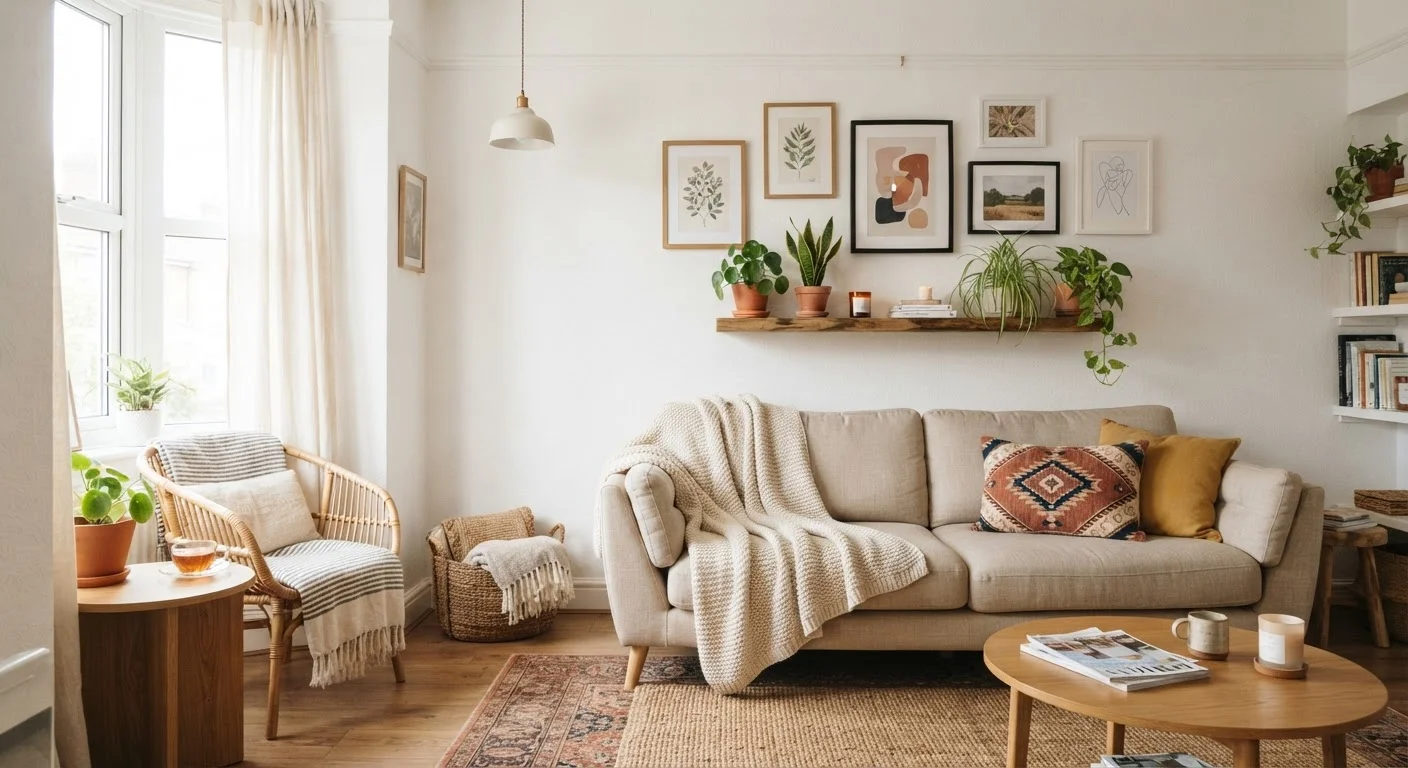
The sofa is the anchor in most living rooms. If yours is in reasonable shape, do not replace it. Instead, work around it. A throw blanket draped over one arm, two or three coordinating pillow covers in your accent color, and a simple rug to define the seating zone can shift the entire feel of the space for well under $100.
Wall space is the other big opportunity. A single large framed print costs far less than a gallery wall full of small frames, and it reads as more intentional. Paint is worth mentioning here too: a fresh coat in a warm neutral can make mismatched furniture look like a deliberate collection. See how to paint a room cleanly on your first try for a practical walkthrough.
For smaller updates that have outsized visual effects, these low-cost moves cover repositioning furniture and swapping textiles without touching your budget much. And if you want a deeper refresh without buying a new sofa, layering textiles and updating lighting is where to start.
Bedroom: simplicity over quantity
Bedrooms feel calmer with fewer items, which works in a budget decorator's favor. The bed is the anchor. A simple, clean-lined bed frame in a neutral finish will outlast trends and work with almost any textile. Bedding does the visual heavy lifting: a duvet cover in a solid or subtle pattern, matched with two standard pillow shams, is enough.
Avoid buying a full bedroom set if the pieces are sold as a matching unit. Mixing a secondhand dresser with a new bedside table in the same wood tone reads as curated rather than mismatched. Common decorating myths unpacks why matching sets often cost more without improving the look.
Lighting matters more in bedrooms than most people expect. A simple table lamp with a warm-toned bulb costs little and changes the atmosphere more than most decorative objects. Keep surfaces clear; a single plant or a small stack of books next to the lamp is sufficient.
Use your existing items before buying new ones
Before purchasing anything for a bedroom refresh, move pieces from other rooms and see what fits. A chair from a spare room, a lamp from a hallway, or a print pulled from storage can fill gaps without spending a dollar. Only buy what genuinely cannot be sourced from within your own home first.
Kitchen and dining area: function first, then style
Kitchens have limited decorating surface area, which keeps costs down naturally. Cabinet hardware is one of the highest-return swaps available: replacing worn pulls with consistent brushed metal hardware changes the whole character of the space for a modest sum. This is a straightforward swap that most homeowners can do without professional help, though always confirm your comfort level with the task before starting.
Open shelving, if you already have it, is free display space. A row of matching canisters or a small collection of plants in simple pots creates visual order without spending much. In the dining area, a tablecloth or placemats in your palette's accent color tie the space back to the rest of the home.
Chairs are easy to overlook but expensive to replace. Before buying new ones, consider whether a coat of spray paint in a consistent color would bring mismatched chairs into alignment. Low-cost weekend projects includes several ideas along these lines that cost under $50 each.
Bathroom and entryway: high-impact, low-spend zones
Bathrooms are small, so small changes register immediately. Swapping a builder-grade mirror for a framed one, adding a simple soap dispenser, and folding two matching towels on a hook instead of draping mismatched ones on a bar can turn a generic bathroom into a space that feels finished. None of these changes require permits or tools beyond a basic screwdriver.
The entryway sets expectations for the rest of the home. A small console table or a floating shelf, a hook rail for coats, and a single framed print at eye level accomplish most of what an entryway needs to do visually. If the floor shows wear, a durable low-pile rug in a neutral tone covers it and anchors the space.
When shopping for pieces for either of these rooms, it is worth understanding when secondhand finds make sense versus when a discount retailer is the better call. This comparison explains how to choose between the two depending on what you need. Also worth reading before any purchase: why bargain-priced decor can cost more in the long run, so you know which quality signals to check before buying.