

Key Takeaways
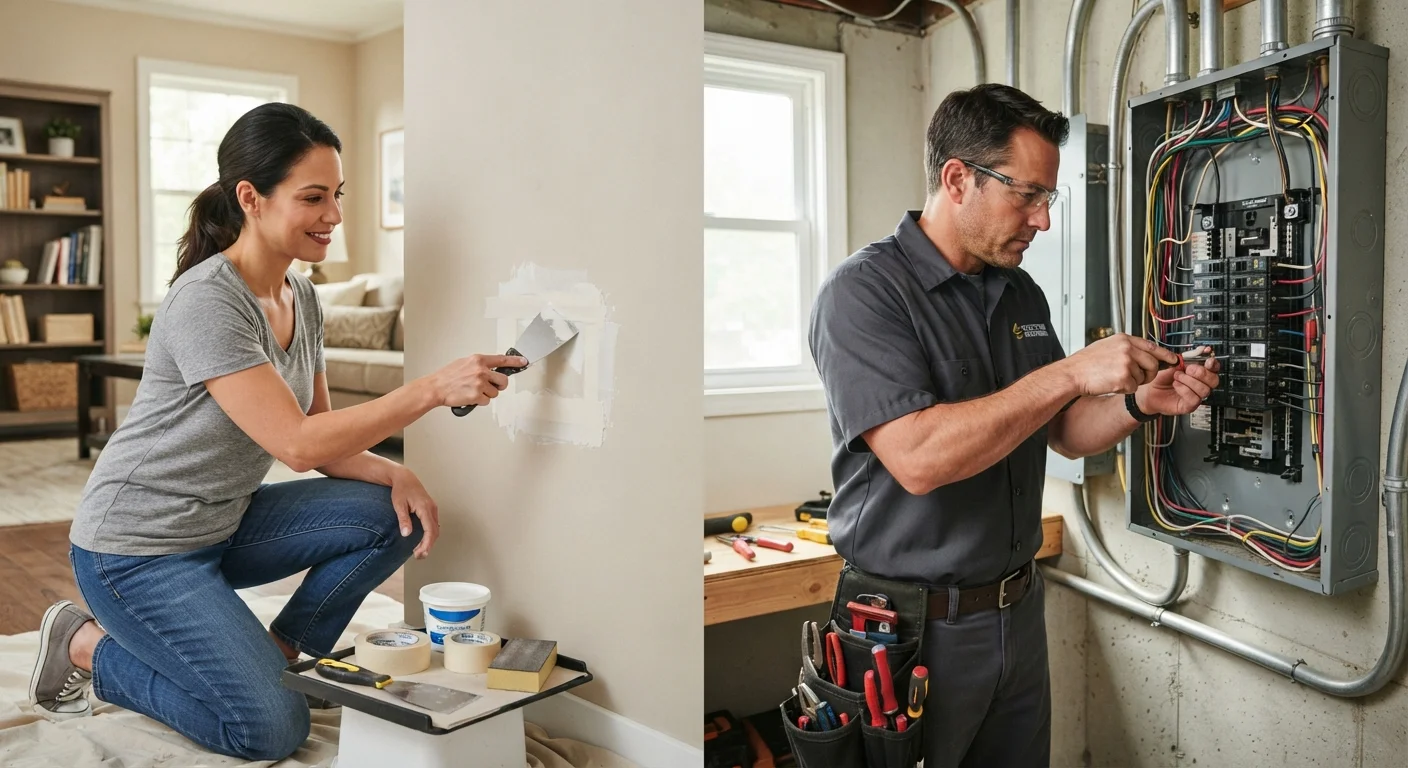
- DIY is appropriate for low-risk tasks that do not involve electrical, gas, or structural systems.
- Licensed professionals are required by law for many repairs involving permits, codes, or hazardous systems.
- Attempting the wrong repair yourself can void insurance coverage and create costly secondary damage.
- Correctly identifying the scope of a job before starting prevents budget overruns and safety risks.
- A hybrid approach, doing prep work yourself and hiring out the skilled labor, often saves the most money.
Option A
DIY repair
The hands-on, cost-saving approach for manageable tasks.
Best for: Families comfortable with basic tools who want to cut labor costs on low-risk, reversible repairs.
Option B
Hiring a pro
The licensed, accountable option for complex or hazardous work.
Best for: Jobs involving electrical systems, gas lines, structural components, or permits that require code compliance.
If you want to handle cosmetic or routine maintenance tasks
DIY repair
Patching small drywall holes, painting, caulking, and replacing fixtures are well within most homeowners' abilities and cost very little in materials.
If the repair involves your electrical panel, gas line, or load-bearing structure
Hiring a pro
These systems carry serious safety and legal consequences when done incorrectly. A licensed contractor also carries insurance that protects your home.
If a permit is required in your municipality
Hiring a pro
Unpermitted work can complicate a home sale, void your homeowners insurance, and require costly teardown and redo by a licensed contractor.
If you want to reduce the total cost of a larger project
DIY repair
Doing demolition, cleanup, priming, or simple prep work yourself before the pro arrives is a legal and practical way to reduce billable labor hours.
How to read a repair before you decide
The question is not whether you are handy. It is whether the repair, if done wrong, can hurt someone, damage the home's systems, or require a permit. Those three factors separate the jobs that belong on a weekend task list from the ones that need a licensed contractor.
Before touching any repair, ask four questions. Is this work regulated by local building codes? Does it involve electricity beyond swapping a light switch, gas in any form, or load-bearing framing? Could a mistake cause water intrusion, fire, or structural failure? And does your homeowners insurance policy require licensed work for coverage to apply? If you answer yes to any of those, call a pro.
For everything else, the budget DIY category is a reasonable starting point. Our companion guide on what first-time DIYers should know walks through tool basics, planning, and how to assess your own skill level before committing.
| Criterion | DIY repair | Hiring a pro |
|---|---|---|
| Upfront cost | Materials only | Labor plus materials |
| Permit requirement | Rarely required for minor tasks | Often required; contractor handles filing |
| Safety risk | Low for cosmetic and simple repairs | Managed by licensed, insured professional |
| Insurance coverage | May be voided if work is unpermitted | Contractor carries liability insurance |
| Skill required | Basic tools and careful reading | Licensed trade training and experience |
| Code compliance | Homeowner responsible for verification | Contractor responsible by law |
| Best for | Painting, caulking, minor plumbing | Electrical, gas, structural, roofing |
What families can typically handle themselves
Most cosmetic and routine maintenance tasks fall squarely in DIY territory. Patching nail holes or small drywall dings, re-caulking a tub or window frame, replacing a faucet aerator, swapping a toilet flapper, painting interior walls, and cleaning dryer vents are all jobs with low failure consequences and clear tutorials available from manufacturer documentation.
Replacing a standard light switch or outlet on a 15-amp circuit is within reach for careful homeowners who turn the breaker off and verify the circuit is dead with a non-contact voltage tester before touching any wires. Replacing a bathroom exhaust fan with the same model and amperage is similarly manageable for most adults comfortable reading an instruction sheet.
Staying on top of these smaller tasks is itself a money strategy. See how preventive maintenance prevents big bills for a fuller picture of why the small stuff matters to your annual budget.
Where the line is: jobs that require a licensed professional
Any work touching your main electrical panel, adding a new circuit, or replacing wiring requires a licensed electrician and almost always a permit. The same is true of gas line repairs, appliance gas connections, and anything involving your home's supply or waste plumbing where it ties into municipal lines.
Structural repairs, including removing a wall (load-bearing or not until confirmed otherwise), repairing floor joists, or patching roof decking, carry serious consequences if done incorrectly. Many municipalities require both a permit and an inspection before and after this work. A contractor who skips the permit is passing that legal risk to you as the homeowner.
Roofing is a common gray area. Replacing a handful of shingles is physically possible for many homeowners, but working at height introduces fall risk, and an improper repair can void a manufacturer warranty or cause water intrusion that costs far more to fix later. Weigh that honestly.
Note: local permit requirements vary by municipality and state. Always contact your local building department before starting any repair you are unsure about. This article provides general information and is not legal or professional advice.
The hybrid approach: do part of the work yourself
Families who want to save money without taking on jobs above their skill level have a practical middle path. Doing your own demolition, material hauling, surface prep, or cleanup before a licensed contractor arrives directly reduces the labor hours they bill. Some contractors will quote a lower rate when they arrive to a prepped site.
You can also handle the finishing work after the licensed portion is complete: painting over new drywall after a plumber patches a wall, or re-caulking after a window installer finishes the framing. That split keeps the skilled and regulated work in licensed hands while letting you contribute real labor hours to lower the total invoice.
Building a plan around this hybrid model works best when paired with a realistic annual maintenance budget. The guide on home maintenance on a tight budget shows how to set repair priorities and allocate funds so you are not making rushed decisions when something breaks.
For a deeper look at why DIY projects fail and how to avoid common missteps before you start, see why DIY home projects go wrong.