

Key Takeaways
- Routine inspections catch small defects before they become structural or mechanical failures.
- Deferred maintenance typically multiplies repair costs rather than delaying them.
- Most preventive tasks require no special tools and cost less than $50 to complete.
- HVAC, roofing, and plumbing are the three systems where early attention saves the most money.
- A written seasonal checklist is the most reliable way to stay consistent with maintenance.
Preventive home maintenance
Preventive home maintenance is the practice of inspecting and servicing your home's systems and structures on a scheduled basis before problems develop. The goal is to catch small issues while they are still inexpensive to fix, rather than waiting until a failure forces an emergency repair. Common tasks include cleaning gutters, replacing HVAC filters, caulking gaps, and checking for minor leaks.
Home maintenance guidance often references a rule of thumb suggesting homeowners budget roughly 1% of a home's purchase price annually for upkeep, though actual costs vary by home age, condition, and region.
What preventive maintenance actually means for your home
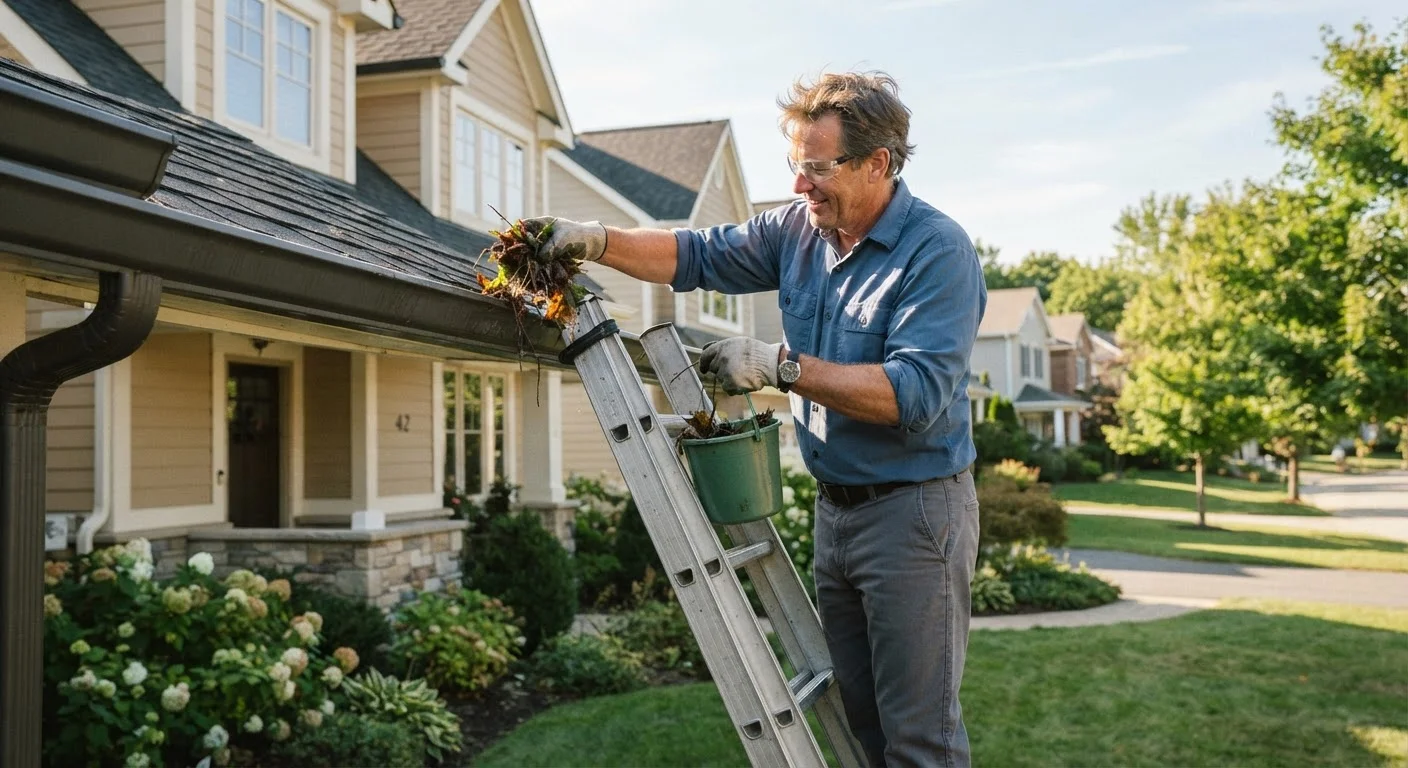
Preventive maintenance is not about perfecting your home. It is about checking the systems and surfaces that are most likely to fail quietly, before a small fault turns into a large, expensive one. A cracked caulk line around a window lets water in. Over months, that water can rot the framing. Replacing caulk costs a few dollars and an afternoon. Replacing rotted framing can cost thousands, plus drywall, paint, and possibly a mold remediation contractor.
The same logic applies across your home. A clogged dryer vent is a fire hazard and an efficiency drain. A dirty HVAC filter strains the blower motor. A loose shingle lets water reach the decking below. None of these start as emergencies, but all of them become emergencies when ignored long enough.
For families on a budget, the math is straightforward. Spending $20 on a new filter, $15 on caulk, or a Saturday afternoon cleaning gutters is far less disruptive than a $4,000 emergency HVAC repair or a $10,000 water damage claim. Minor water leaks alone illustrate how quickly neglected maintenance compounds into serious structural and financial damage.
The systems that cost the most when neglected
Three home systems generate the largest surprise repair bills when maintenance is skipped: HVAC, roofing, and plumbing.
HVAC systems have filters designed to be changed every one to three months, depending on filter type and household conditions. A filter left in place for a year restricts airflow, forces the motor to work harder, and can shorten the system's lifespan by years. A full HVAC replacement runs several thousand dollars in most markets. A filter costs a few dollars. Extending the life of your HVAC, roof, and plumbing covers the upkeep habits that delay costly replacements for all three systems.
Roofs fail gradually. Flashings separate, shingles crack, and granules wash off over time. A professional roof inspection every few years, combined with your own visual check after major storms, catches these issues while patching is still viable. Waiting until water appears on the ceiling usually means the decking and insulation are already compromised.
Plumbing leaks are often invisible until they are not. Checking supply lines under sinks, around the toilet base, and at the water heater connection every few months takes minutes. A slow drip from a supply line fitting can saturate a cabinet floor and subfloor over weeks without any obvious sign until the damage is done.
Set a recurring phone reminder
Add quarterly reminders to your phone calendar for the four tasks most likely to slip: gutter cleaning, HVAC filter change, smoke detector test, and a quick visual check of exterior caulk and weatherstripping. Four reminders a year is enough to catch most of the issues that become expensive when missed.
Building a simple maintenance habit that actually sticks
The reason most families skip maintenance is not laziness. It is the absence of a system. Without a written schedule, tasks get forgotten until something breaks. The fix is a checklist tied to the calendar, not a resolution to be more attentive.
Divide tasks by season. Spring is for inspecting the roof after winter, cleaning gutters, and checking window and door caulk. Summer is for servicing the HVAC before peak cooling demand and inspecting the exterior for paint or siding gaps. Fall is for cleaning gutters again, draining outdoor hoses, and checking weatherstripping. Winter is for testing detectors, checking the water heater, and inspecting the attic for condensation or pest signs.
A seasonal maintenance checklist breaks this down quarter by quarter so nothing falls through the cracks. And if budget is a constraint, building a realistic annual plan helps families prioritize which tasks to tackle first when money is tight.
For tasks like sealing air leaks, which directly affect energy bills, caulk, weatherstripping, and foam are low-cost materials most homeowners can apply themselves in a single afternoon.
Knowing the difference between a DIY task and a professional job
Preventive maintenance does not mean tackling every job yourself. Changing filters, caulking windows, cleaning gutters, and testing detectors are tasks most adults can handle safely with basic tools. Work involving electrical panels, gas appliances, the structural frame, or roof access beyond a single-story pitch carries real injury risk and, in many jurisdictions, requires a permit or licensed contractor.
Skipping a professional on regulated work can void insurance coverage and create liability issues if the work causes damage or injury. The goal of preventive maintenance is to reduce costs, not to create new risks by taking on jobs that require specific training and licensing.
Understanding where the DIY line is for common repairs helps families make informed decisions about which tasks to handle and which to assign to a qualified professional. For any work involving gas, electrical, or structural systems, always verify local permit requirements before proceeding.
$1 to $4
Return for every $1 spent on maintenance
The National Association of Home Builders has cited research suggesting that each dollar spent on preventive maintenance can avoid several dollars in future repair costs, though actual ratios vary by home and task.
47%
of homeowners have deferred maintenance due to cost
Surveys by home services researchers have found that nearly half of homeowners put off at least one maintenance task in the past year because of budget concerns, often increasing the eventual repair cost.
15+ years
Potential HVAC lifespan with regular servicing
HVAC manufacturers and contractors generally agree that systems serviced annually and with filters changed on schedule can reach or exceed 15 years before replacement, compared to 10 to 12 years without maintenance.