

Key Takeaways
- Unit price, not shelf price, is the number that lets you compare products accurately.
- Markdown dates printed on clearance tags tell you how close an item is to its final price drop.
- Price-match policies often contain conditions that exclude sale items, online-only prices, or limited quantities.
- A crossed-out "original" price may reflect a rarely-charged retail price, not what the item typically sold for.
- Checking total cost (shipping, fees, accessories required) prevents surprises at checkout.
What you will need
What the numbers on a tag actually mean
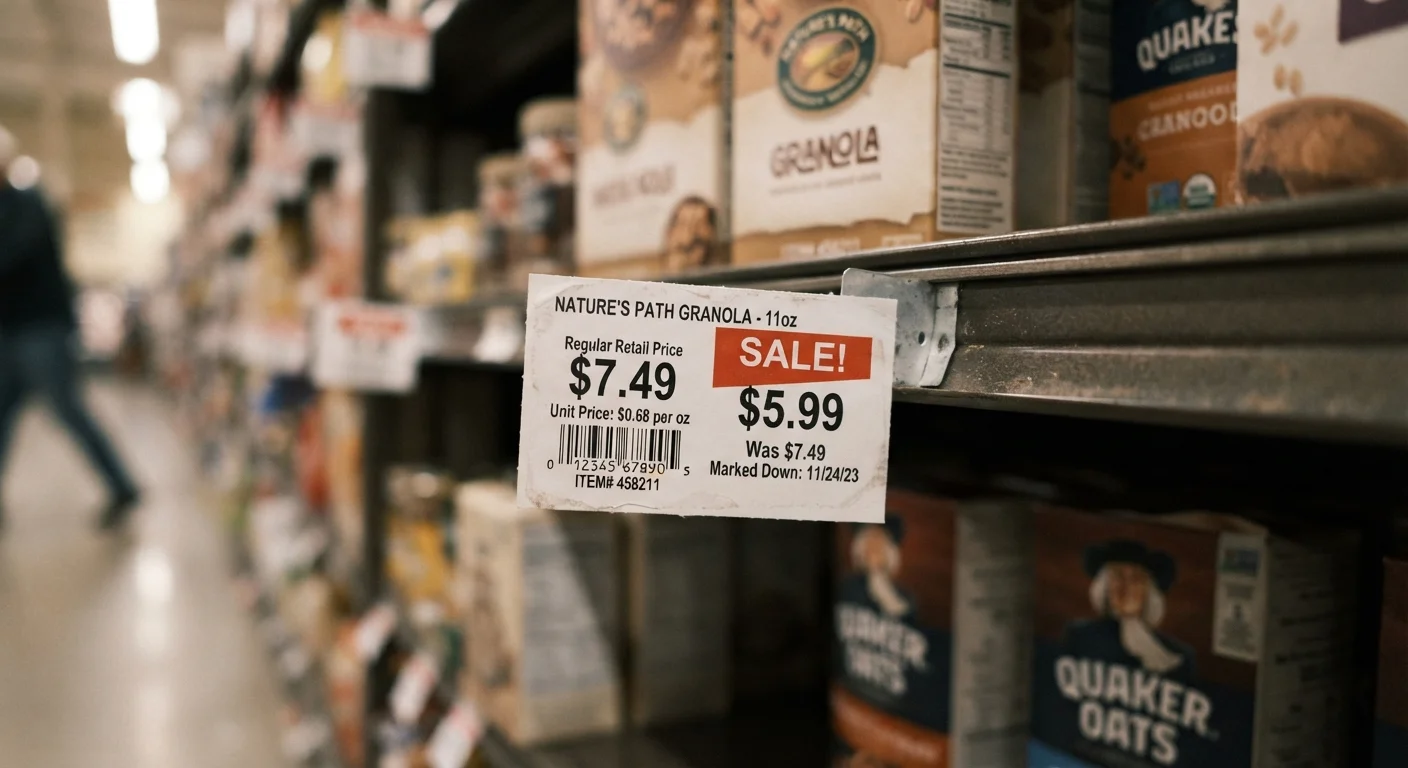
Most price tags display at least two numbers: a large current price and, often, a smaller unit price. The large number is what you pay today. The unit price (expressed as cost per ounce, per square foot, or per count) is what lets you compare products of different sizes without mental arithmetic. Federal regulations under the Fair Packaging and Labeling Act require unit pricing in many grocery and drug contexts, though application varies by state and store format.
When a tag shows both a "was" price and a "now" price, the "was" figure is worth scrutinizing. Retailers are legally required in most U.S. states to have offered the item at the higher price for a defined minimum period (commonly 28 days) before advertising a discount. However, that original price sometimes reflects a briefly-charged or rarely-charged price, so the percentage-off claim can overstate the practical savings. Pricing tactics like anchoring depend on that crossed-out number to frame value, regardless of whether the original price was common in practice.
Color-coded tags carry meaning in many stores. A yellow tag may indicate a standard sale, while a red or white clearance tag signals merchandise the store is trying to move permanently. The distinction matters because clearance items are usually excluded from additional promotional discounts and coupons.
How to decode clearance tags and markdown dates
Clearance tags at many large retailers include a markdown date, sometimes printed in small text or encoded in the item number. This date tells you when the price was last reduced. Retailers typically run clearance in cycles, dropping the price by a fixed percentage (often 25 to 33 percent) each time an item fails to sell. If the markdown date is recent, a further reduction may be weeks away. If the date is several weeks old, another drop could be imminent.
Seasonal markdown calendars can help you predict when clearance cycles begin for specific categories. Clothing and seasonal decor tend to hit their steepest discounts at the end of a season, while electronics clearance often follows product refresh announcements.
Photograph tags before you leave the aisle
A photo of the full price tag, including the SKU, markdown date, and unit price, gives you a reference point if the shelf price differs at the register. It also supports a price-match request if you find a lower price later the same day.
To find the markdown date on a tag without obvious labeling, photograph the tag and compare the item number format against the retailer's published date-coding convention. Several shoppers' forums document these codes for major U.S. chains, though codes do change, so verify against current tag samples when possible.
Price-match fine print worth reading before you ask
Price-match policies are a real saving tool, but the conditions matter as much as the offer. Common exclusions include: prices from marketplace sellers (as opposed to the retailer itself), limited-quantity or doorbusters, prices that require membership, and items already on clearance. Some policies require a price match request at the time of purchase rather than after.
Before approaching the customer service desk, confirm the competing price is for the identical item (same model number, color, and configuration), that the competing retailer has the item in stock, and that no excluded category applies. Price differences between stores are often legitimate and may not qualify for a match even when the gap is large.
For a thorough pre-purchase check, the deal-verification checklist covers how to confirm every available discount before finalizing a transaction.