

Key Takeaways
- Replacing furniture is rarely necessary to make a living room feel new.
- Layering textiles like rugs, throws, and pillow covers is one of the lowest-cost changes with high visual impact.
- A single painted accent wall can shift a room's atmosphere for under $50 in materials.
- Swapping or repositioning light fixtures and bulbs changes how a room feels at any time of day.
- Rearranging furniture costs nothing and can improve both flow and function.
What you will need
Why the furniture is rarely the problem
Most living rooms that feel tired have the same issue: the furniture is fine, but nothing around it is doing any work. The walls are bare or painted a color that no longer fits. The lighting is harsh or flat. The textiles are mismatched leftovers from different phases of life. Fixing those layers costs a fraction of what a sofa replacement runs, and the results are often more noticeable.
Before spending anything, do a quick audit. The room assessment checklist walks through exactly what to keep, what to repurpose, and where a small investment makes the most sense. Once you know what you are working with, the steps below give you a clear sequence to follow.
What you will need
Most of these materials are inexpensive and reusable. The tools listed are for the painting step; the textile and lighting steps require no special equipment.
Paint roller and tray
Applies wall paint evenly across large surfaces for the accent wall step.
Painter's tape
Protects trim, ceilings, and adjacent walls from stray paint.
Interior latex paint (one quart)
One quart covers roughly 100 square feet, enough for a single accent wall in most living rooms.
Measuring tape
Used to check rug sizing and furniture spacing before moving anything.
Steamer or iron
Removes wrinkles from new textile covers so they look intentional rather than cheap.
Step-by-step: refreshing the room
Work through these steps in order. Each one builds on the last, so finishing the painting before adding textiles lets you match colors to the new wall rather than the old one.
Rearrange before buying anything
Move the sofa and chairs into at least one configuration you have never tried. Angle a chair toward a window, pull the sofa away from the wall by a foot, or create two separate seating zones if the room is large enough. This costs nothing and often solves the real problem, which is usually dead space and poor traffic flow rather than worn furniture.
See small decorating changes that shift a room's feel for more on repositioning as a low-cost tool.
Paint one accent wall
Choose the wall behind the main seating or the wall a visitor sees first when entering. One quart of interior latex paint is enough for most accent walls. Clean the wall surface, apply painter's tape along trim and the ceiling line, and roll on two coats, letting the first dry fully before the second.
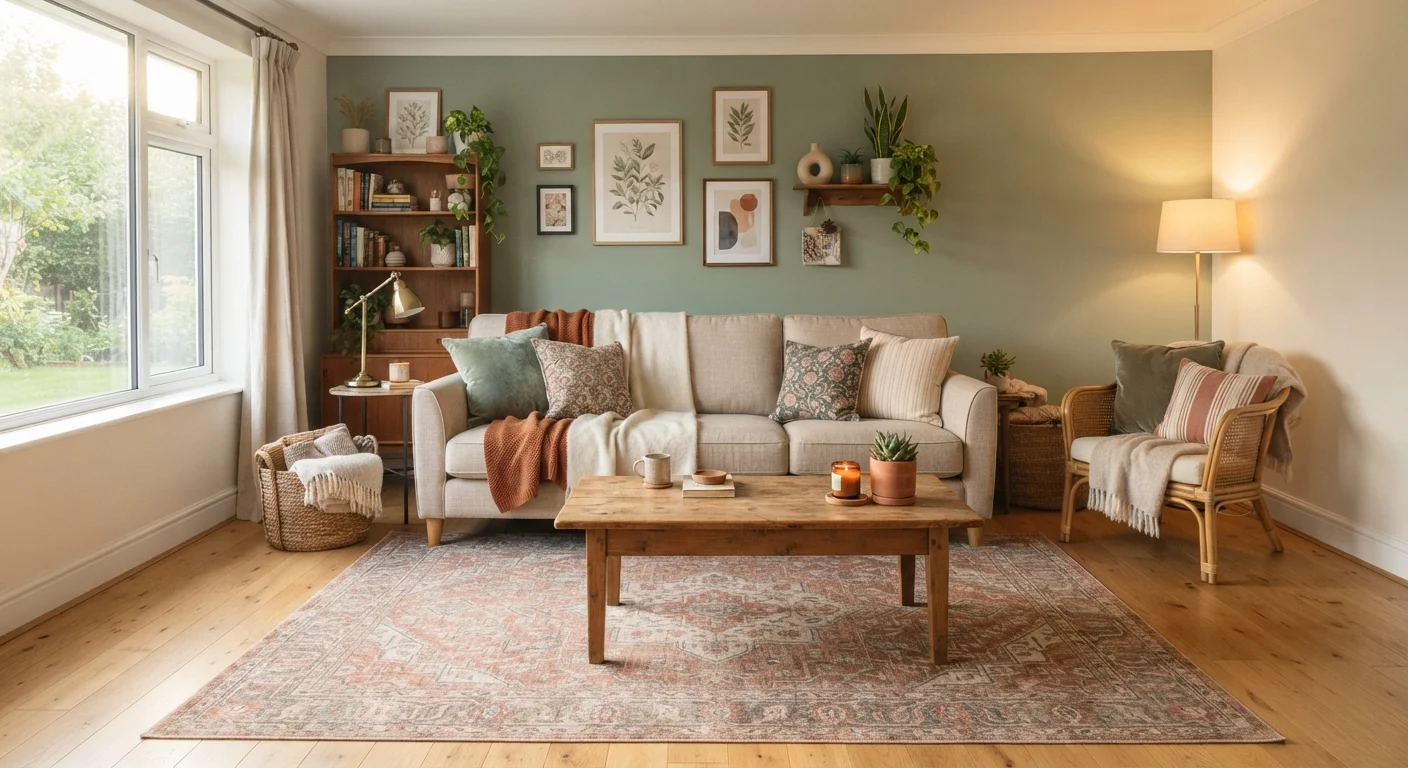
Stick to muted, mid-tone colors: dusty blue, sage green, warm terracotta, or soft charcoal. These read as intentional against almost any furniture color. If you want more detail on the painting process itself, the weekend wall refresh guide covers prep, cutting in, and rolling without wasted paint.
Layer in textiles
Swap pillow covers first: covers alone cost far less than full pillows and create a complete color change. Choose two or three covers that share one color with the new accent wall and one color already present in the room. Add a throw blanket folded over one sofa arm. Then place a rug if the floor is bare: a rug anchors the seating arrangement and adds warmth without requiring furniture replacement.
A rug sized at least 8 by 10 feet in most living rooms allows the front legs of sofas and chairs to sit on it, which ties the grouping together visually.
Update the lighting
Swap overhead bulbs from cool white (4000K or higher) to warm white (2700K to 3000K). This single change shifts a room from clinical to comfortable. If the existing floor lamp or table lamp shades are yellowed or misshapen, replacement shades are widely available and inexpensive. Add one small lamp on a side table or shelf to create a secondary light source that reduces the flat overhead effect in the evening.
Edit and add wall accents selectively
Remove everything currently on the walls and lay it on the floor. Keep only pieces that work with the new paint color. Group smaller frames together rather than scattering them: a cluster of three or four frames reads as a deliberate arrangement, while single frames spread across a wall look random. A mirror placed opposite a window doubles natural light without any wiring or permanent changes.
Common mistakes that waste money
Two patterns come up repeatedly when families overspend on refreshes. The first is buying new accent pieces before committing to a paint color. Once the wall changes, half those purchases can look wrong. Paint first, then shop for accents.
The second is over-buying textiles. A sofa does not need five throw pillows to look finished. Two or three with real visual contrast do more than a pile of similar tones. The decorating myths article covers this in more depth, including the matching-set trap that inflates budgets without improving results.
For anyone who wants to go further room by room, the starter framework for first-time decorators lays out a practical visual system that holds together across the whole house without requiring a design background.