

Key Takeaways
- Swapping throw pillow covers costs under $20 and immediately shifts a room's color story.
- Repositioning furniture changes traffic flow and can make a room feel larger without spending anything.
- Layering rugs adds visual depth and warmth that a single rug often cannot achieve alone.
- Changing a lampshade or bulb color temperature alters the entire mood of a space.
- Grouping small objects into intentional clusters looks more considered than scattering them individually.
- Hanging curtains closer to the ceiling rather than the window frame makes walls appear taller.
Why small moves matter more than big purchases
Most families assume a room needs new furniture or a full repaint to feel meaningfully different. In practice, the changes that register most strongly are often the ones that cost the least. Scale, light, color, and arrangement work together constantly, and shifting any one of them nudges the whole room.
This list focuses on changes that require no contractor, no permit, and typically no more than an afternoon. If you want a structured starting point before you begin, the room assessment checklist can help you identify what is already working so you do not change things that do not need changing.
Swap throw pillow covers, not the inserts
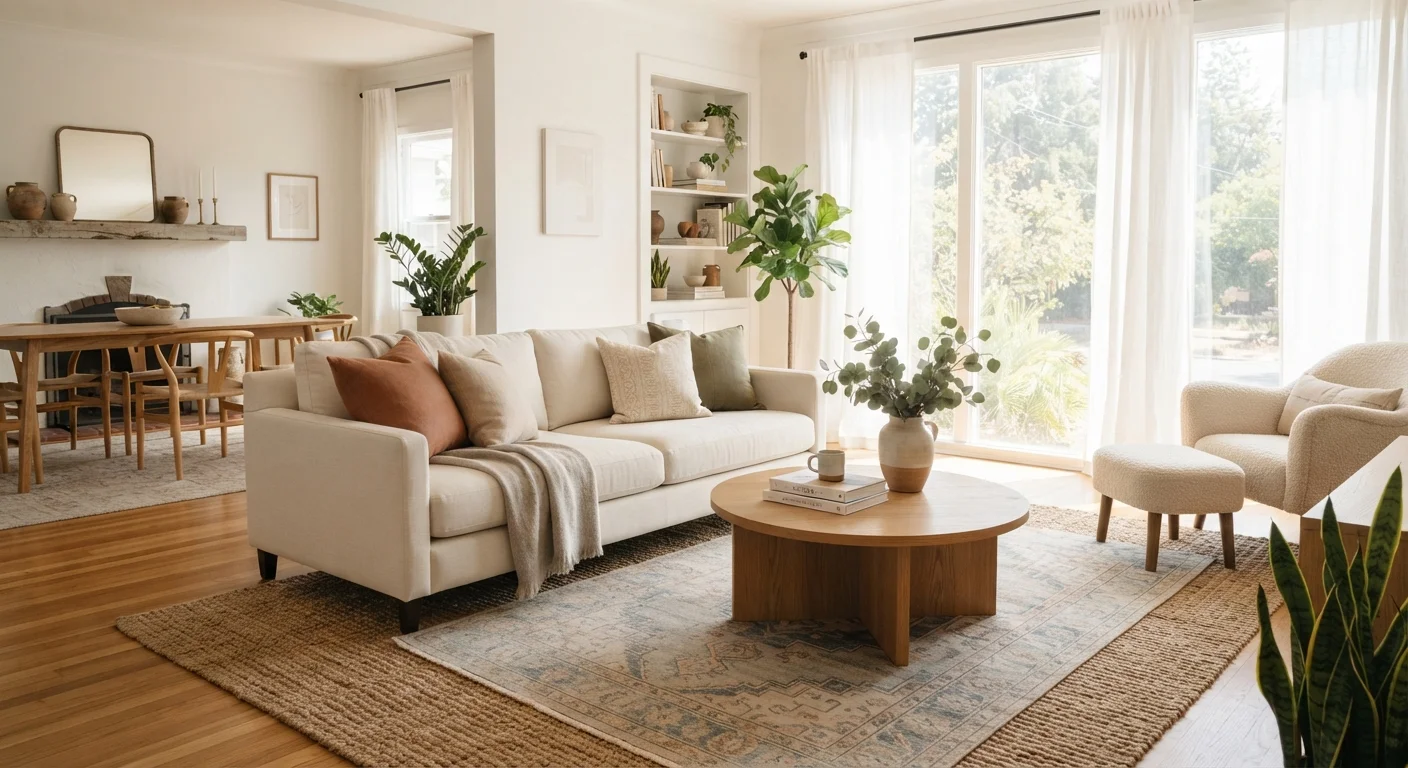
Throw pillow inserts last for years. The covers are what carry color and texture, and they can be swapped in minutes. A set of covers in a new tone costs a fraction of buying full pillows, and storing off-season covers takes almost no space. Choosing one consistent accent color across two or three covers creates cohesion without requiring a matching set for everything else in the room.
Covers carry the color; inserts just hold the shape.
Hang curtains at ceiling height, not window height
Most curtain rods ship at window-frame level, which cuts the visual height of a wall in half. Moving the rod to within a few inches of the ceiling and using floor-length panels draws the eye upward and makes the room feel taller. The curtains themselves do not have to be expensive; the placement does most of the work. Check that the new rod location does not require patching old holes in a visible spot before committing to the change.
Ceiling-height curtain rods make walls feel taller at no extra cost.
Reposition furniture away from the walls
Pushing all furniture against the walls is a common instinct, but it usually makes a room feel less connected, not more spacious. Floating a sofa a foot or two off the back wall and pulling chairs inward creates a conversation area with a center and edges. The open space behind or beside a piece becomes part of the composition rather than dead floor. Experiment with one move at a time before deciding where things land permanently.
A sofa pulled off the wall defines a space rather than just filling it.
Change the lampshade or bulb color temperature
A yellowed, dated, or mismatched lampshade changes how the whole lamp reads in a room. Replacing just the shade can cost under $15. Beyond the shade, the color temperature of bulbs matters considerably. Bulbs around 2700K produce a warm, amber light suited to living spaces and bedrooms. Bulbs at 4000K or above read as cool and clinical, which works in a kitchen or bathroom but flattens a cozy room. Swapping bulbs is a two-minute change with a noticeable effect on how the space feels at night.
Bulb color temperature shapes a room's mood as much as any decor choice.
Layer a smaller rug over a larger one
A single rug defines a zone. Two rugs layered together add depth and warmth, and the combination can actually look more considered than one rug alone. A natural fiber rug underneath with a patterned or colored rug on top works well in living rooms and bedrooms. The outer rug does not need to be large; even a 3x5 or 4x6 placed over a larger neutral base shifts the visual weight of the seating area. Thrift stores and discount home sections are worth checking before buying new for the bottom layer.
Two layered rugs add visual depth that a single rug rarely achieves.
Group small objects into deliberate clusters
Small decorative objects scattered across surfaces tend to read as clutter rather than decor. Grouping three to five objects together on one tray or surface, varying their heights, creates a focal point. The number and symmetry of groups matters less than giving each cluster enough breathing room from the others. Objects that share one common element (material, tone, or shape) hold together visually even when they are not a matched set. This costs nothing if you work with what you already have.
Grouped objects read as intentional; scattered ones read as clutter.
Add a mirror to a dim or cramped-feeling wall
A mirror reflects existing light and makes a space feel larger in both directions. Placed opposite a window, it bounces natural light across the room. Placed at the end of a narrow hallway, it lengthens the sightline. Secondhand mirrors are widely available and often cost a few dollars, particularly in thrift stores. The comparison between thrift stores and discount retailers covers where each type of find is more likely to pay off.
A mirror opposite a window does more for light than an extra lamp.
Putting it all together
None of these changes require a design background or a large budget. The goal is to look at what a room already has and make deliberate decisions about arrangement, light, and layering. One or two of these moves in combination will do more than a single expensive purchase made without a plan.
Start with one change, then assess
Making several changes at once makes it hard to know what is actually working. Try one move, live with it for a day or two, and then decide whether to continue or reverse it. This approach costs nothing and prevents the frustration of changing too much at once and losing track of what the room looked like before.
For a broader look at how these ideas apply room by room, see the starter framework for first-time decorators. If you are working specifically on a living room and want to go further without replacing furniture, the living room refresh guide covers paint, lighting, and textile layering in more depth.