

Key Takeaways
- A slow drip wasting just one drop per second can add up to more than 3,000 gallons of water per year.
- Mold growth can begin within 24 to 48 hours of persistent moisture, creating health and structural risks.
- Most minor leaks cost under $150 to fix; the water and structural damage they cause can run into thousands.
- Homeowners insurance often denies claims for damage caused by long-term, gradual leaks.
- Regular visual checks under sinks, around toilets, and near appliances can catch leaks before they compound.
Why small leaks don't stay small
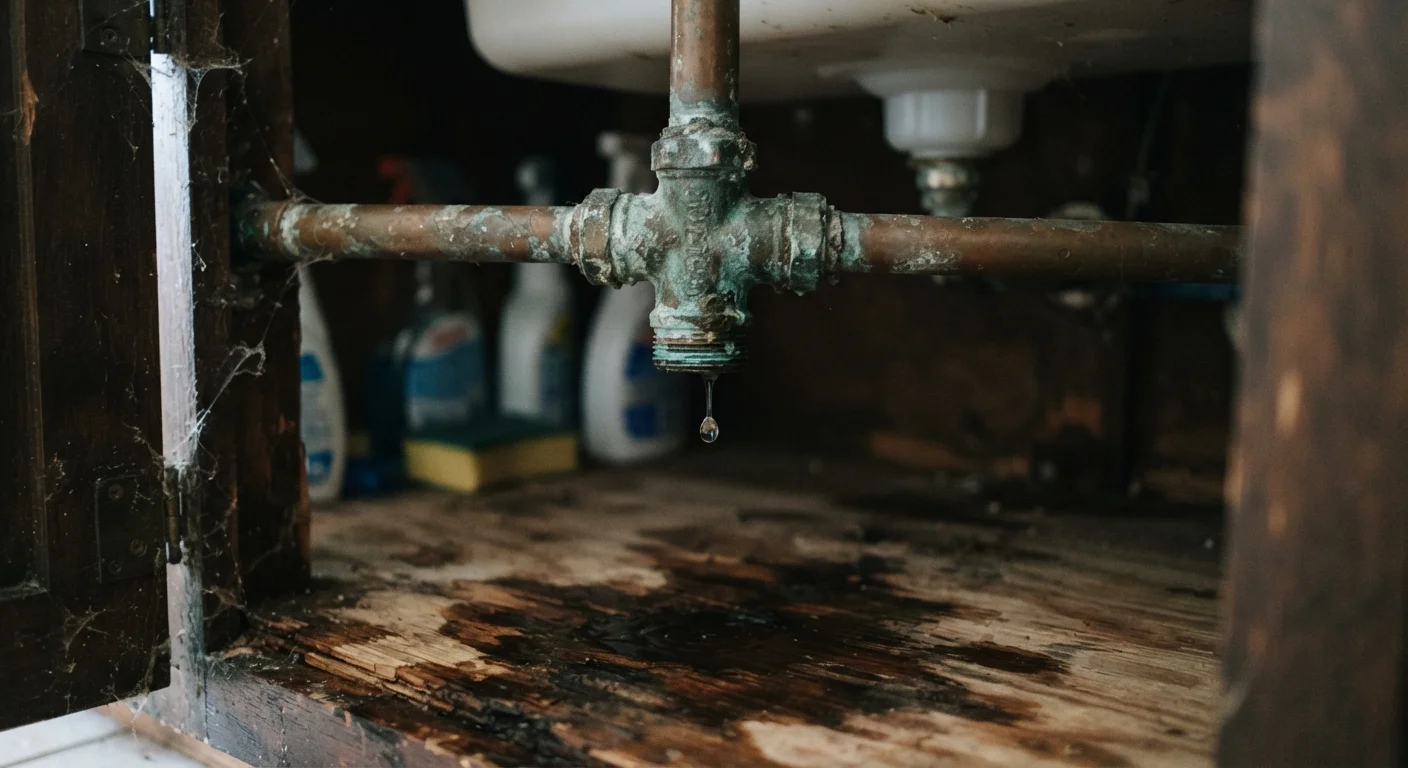
Water is patient. A pinhole leak in a supply line or a loose compression fitting under the sink will not announce itself with a flood. It will drip quietly for weeks or months, soaking into subflooring, cabinet bases, and wall framing. By the time discoloration or a musty smell appears, the hidden damage is often already significant.
The financial gap between acting early and acting late is large. A plumber replacing a worn toilet flapper or tightening a supply-line fitting typically charges far less than a contractor repairing rotted subflooring or remediating mold behind drywall. Preventive maintenance habits are what separate families who manage their homes on a budget from those who face sudden, budget-wrecking repair bills.
Treating a visible drip as a low-priority item because it seems too small to matter.
Why it happens: A slow drip does not create obvious urgency. Families with busy schedules tend to note it mentally and keep moving, assuming it can wait until the next convenient weekend.
Ignoring early warning signs like musty odors or soft flooring near plumbing fixtures.
Why it happens: These signs are easy to rationalize. A slight softness in flooring near the toilet gets attributed to age, and a musty smell gets blamed on poor ventilation rather than hidden moisture.
Skipping the area behind and beneath appliances during regular home checks.
Why it happens: Refrigerator ice maker lines, washing machine hoses, and dishwasher connections are out of sight and rarely thought about until something dramatic happens.
Applying a patch or sealant over a fitting leak and assuming the problem is solved.
Why it happens: Plumber's tape or pipe sealant around a dripping fitting feels like a fix, and it often stops the visible drip temporarily. Homeowners do not follow up to confirm the underlying cause is addressed.
Assuming the water bill is the best indicator of whether a leak exists.
Why it happens: Many families rely on an elevated water bill as the signal to start investigating. Slow leaks, however, can add moderate cost without producing a spike obvious enough to prompt action.
The insurance gap families don't expect
Many homeowners assume their policy will cover water damage regardless of how it started. However, most standard homeowners insurance policies distinguish between sudden, accidental water damage (such as a burst pipe) and gradual damage caused by a leak that went unaddressed. Gradual damage claims are routinely denied. That distinction can leave a family holding a bill for $5,000 or more in repairs with no reimbursement.
Gradual leaks are often excluded from coverage
Standard homeowners insurance policies typically cover sudden and accidental water damage, not damage that developed over time from an unaddressed leak. If an adjuster determines the damage resulted from a leak you could reasonably have detected and repaired, the claim may be denied in full. Review your policy's water damage exclusions carefully and consult your insurance agent for clarification specific to your policy and state.
Reviewing your policy's water damage language before a problem arises is worth the time. Look specifically for phrases like "sudden and accidental" and check whether your insurer requires evidence of reasonable maintenance. Insurers assess coverage based on policy language and state regulations, so consulting your agent or a licensed professional for your specific situation is the right step before assuming coverage exists.
For families building a maintenance budget that accounts for these risks, a realistic annual home maintenance plan can help prioritize where preventive dollars go each year.
Building a simple leak-detection routine
You do not need special tools to catch most household leaks early. A 10-minute monthly walkthrough covers the most common failure points: under kitchen and bathroom sinks, behind toilets, around the base of the water heater, and at hose connections on washing machines and dishwashers. Look for moisture rings on cabinet shelves, rust staining on pipe fittings, and soft spots on flooring.
For toilets, a drop of food coloring in the tank (without flushing) will reveal a flapper leak if the color appears in the bowl within 15 minutes. Water meters can help detect leaks that are not visible: record the meter reading, avoid using any water for two hours, and recheck. Any movement indicates water is escaping somewhere in the system.
Sealing around fixtures is part of the same routine. Deteriorated caulk around tub surrounds and sink bases lets water migrate into wall cavities. Recaulking those joints is a low-cost task that can prevent expensive wall and floor repairs. More guidance on protecting the home's plumbing and other major systems is available through smart upkeep strategies for HVAC, roofing, and plumbing.
3,000+
Gallons wasted per year from one dripping faucet
The U.S. Environmental Protection Agency estimates that a faucet dripping at one drop per second wastes more than 3,000 gallons of water annually.
10%
Of homes have leaks wasting 90+ gallons per day
According to the EPA's WaterSense program, about 10 percent of U.S. homes have water leaks that waste at least 90 gallons per day.
24-48 hrs
Time for mold growth to begin after water intrusion
The EPA notes that mold can begin to grow on wet building materials within 24 to 48 hours, making rapid response to leaks important.